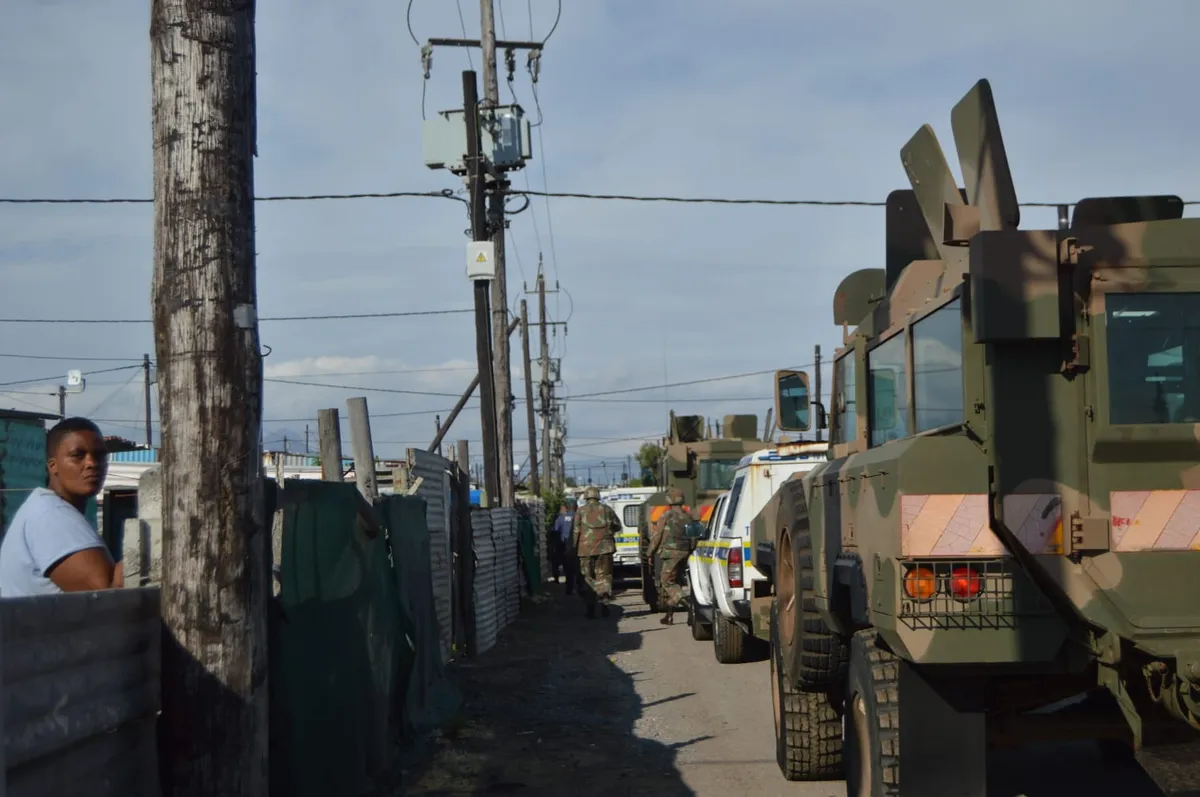
“It definitely shows that additional boots on the ground and visibility impact crime. It changes the patterns,” said Nicola Small, reflecting on the recent deployment of the South African National Defence Force (SANDF) in the Cape Flats area. This operation, known as Operation Prosper, aims to assist the South African Police Service (SAPS) in addressing rampant gang violence that has plagued the region.
On April 14, 2026, 2,200 soldiers were deployed across several provinces, with a focus on gang hotspots including Lavender Hill, Steenberg, and Mitchells Plain. The operation is expected to cost over R800 million and is intended to provide a visible military presence in communities that have suffered from escalating violence.
Since the deployment, there have been no reported shootings in Lavender Hill and Steenberg, raising hopes among residents for a temporary respite from the violence. However, the situation remains precarious, as seven men are set to appear in various courts for murders and attempted murders linked to shootings in these gang-ridden areas.
Despite the initial signs of reduced violence, community leaders express skepticism about the sustainability of such military interventions. “Gangsters are unfazed: SANDF deployment fails as Cape Town killings surge,” a recent headline suggests a growing concern that the military presence may not be a long-term solution. More than 50 killings were reported in a single week during the first two weeks of Operation Prosper, highlighting the ongoing challenges faced by law enforcement.
MP Ian Cameron emphasized the need for a more comprehensive approach, stating, “It has to be intelligence-led and prosecution-led. It is not enough to put more boots on the ground and hope for the best.” This sentiment reflects a broader understanding that while military presence can provide immediate support, it cannot replace the need for effective policing and community engagement.
Historically, the SANDF has been deployed to assist police in crime fighting in South Africa since the late 1990s, often in response to similar crises. However, the effectiveness of such deployments in curbing gang violence remains unclear. Details remain unconfirmed.
Community leaders warn that gangs often retreat and hide when military forces are present, only to return to their activities once the troops leave. Ivan Waldeck, a local activist, noted, “At the end of the day, it’s about getting the guns off the street.” This highlights the complexity of the issue, as the presence of the SANDF may not address the root causes of gang violence.
As the operation continues, the public and authorities alike will be watching closely to see if the SANDF’s presence can lead to lasting change in the Cape Flats. With the deployment set to last until March 31, 2027, the coming months will be crucial in determining the impact of this military intervention on crime and community safety.