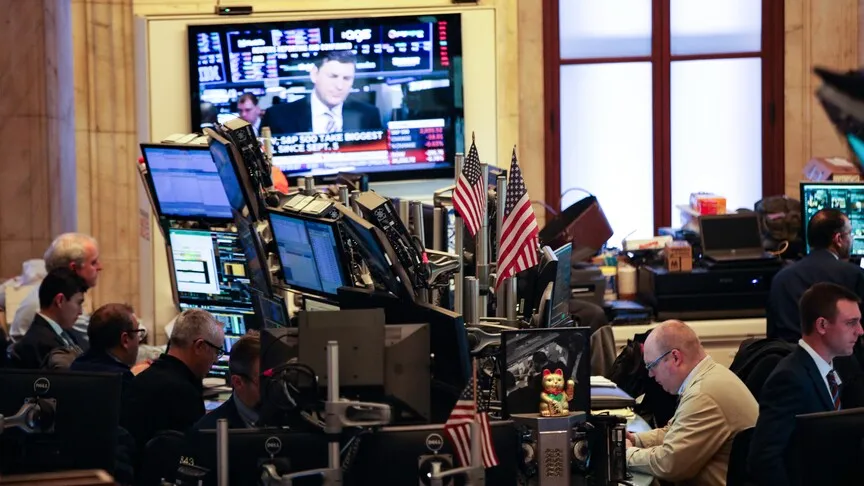
The Johannesburg Stock Exchange (JSE) started the week on the back foot due to heightened geopolitical tensions following the collapse of US-Iran peace talks. This situation has contributed to a negative sentiment in the market, reflected in the performance of key indices.
At market close, the JSE All Share Index was down by 0.45%, while the Top 40 Index declined by 0.47%. Financials saw a significant drop of 0.91%, and Industrials shed 0.76%. In contrast, the Resources sector managed to edge up slightly by 0.05%. These fluctuations indicate a mixed performance across different sectors, with financials and industrials particularly affected by the prevailing market conditions.
In a broader context, the JSE has experienced a net decline of approximately 514 companies since 1993, highlighting a long-term trend of contraction within the listed universe. Haroon Borat, a market analyst, noted that “the contraction of the listed universe on the JSE is not merely a headline issue of shrinking company numbers, but a deeper structural shift toward concentration.” This observation underscores the challenges faced by the exchange in maintaining a diverse and robust market.
Furthermore, the Herfindahl-Hirschman Index (HHI), which measures market concentration, rose by 90% over the reporting period, indicating increasing concentration within the market. Borat also pointed out that compliance-related factors tied directly to the JSE accounted for only about 15% of delistings, suggesting that other underlying issues may be contributing to the decline.
On a more positive note, Sygnia, an investment management firm, reported growth in its earnings per share (EPS) by 8.2% per year over the past three years. Additionally, Sygnia’s revenue grew by 13% to R1.1 billion, with insiders owning 36% of the company, amounting to R1.7 billion at the current share price. This growth contrasts with the overall market trends and highlights the potential for individual companies to thrive despite broader market challenges.
As market observers continue to analyze the situation, they note that the JSE has performed materially worse than both global and emerging-market peers over the democratic era. This raises concerns about the future competitiveness of the exchange and its ability to attract new listings and investments.
Looking ahead, analysts suggest that the JSE may need to address structural issues to reverse the trend of declining company numbers and improve its overall performance. The current geopolitical landscape will likely continue to influence market sentiment, and stakeholders are urged to remain vigilant as developments unfold.