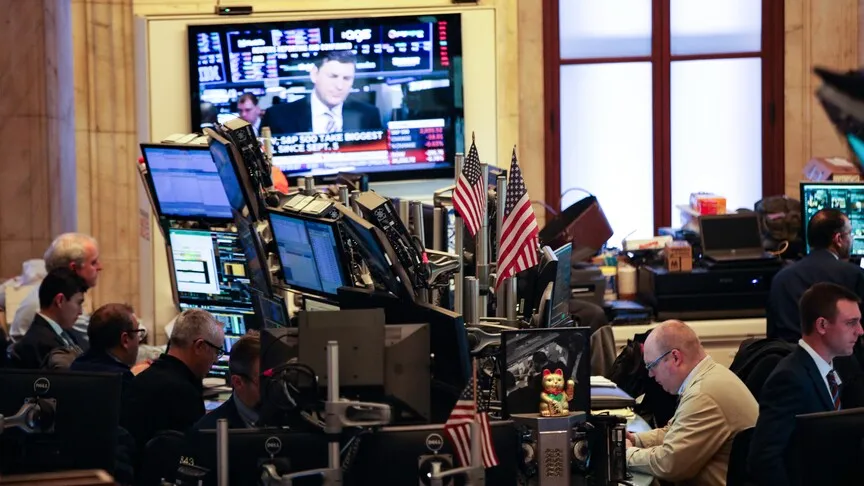
The S&P 500 and Nasdaq erased declines since the late-February outbreak of the Iran war, marking a significant recovery in US stock markets. On April 13, 2026, the S&P 500 added 1.02%, or 69.35 points, to close at 6,886.24. This positive momentum was echoed by the Nasdaq Composite, which gained 1.23%, or 280.84 points, closing at 23,183.74, while the Dow Jones Industrial Average rose 0.63%, or 301.68 points, to finish at 48,218.25.
In a notable shift, BlackRock upgraded its outlook for US stocks on the same day, indicating a turn towards an overweight position on US equities. Analysts project a robust growth in US corporate earnings, forecasting an 18.7% year-on-year increase, with the IT sector expected to lead this growth with a remarkable 43.4% increase.
As of April 13, 2026, the S&P 500 is up 0.4% year-to-date, reflecting a resilient performance despite the backdrop of geopolitical tensions. Barclays has issued a revised year-end price target for the S&P 500, increasing it from 7,400 to 7,650, while JP Morgan has also adjusted its target, warning of potential risks that could see the index dip to 6,000 if energy shocks worsen.
Bank of America, on the other hand, anticipates the S&P 500 to reach around 7,100 by the end of 2026, suggesting a cautiously optimistic outlook for investors. The S&P 500 ETF (SPY) has resumed its upward trajectory after completing a corrective phase, reaching a high of $697.87 on January 28, 2026, indicating renewed investor confidence.
US President Donald Trump commented on the situation, stating, “They’d like to make a deal very badly,” hinting at ongoing diplomatic efforts amid the conflict. Analysts from BlackRock expressed a moderately positive view on US stocks, noting that they are likely to hold up better than other markets, even if absolute performance may disappoint.
Venu Krishna from Barclays remarked on the fragile macro backdrop, stating, “The macro backdrop has become more fragile … But we believe the U.S. continues to offer stronger nominal growth than other major economies.” This sentiment reflects a cautious optimism as investors navigate the complexities of the current economic landscape.
Bank of America economists cautioned that even if the ceasefire persists, a return to pre-war scenarios is unlikely, suggesting that the market may have to adapt to a new normal. As the situation evolves, market observers will be closely monitoring developments that could impact the S&P 500 and broader financial markets.