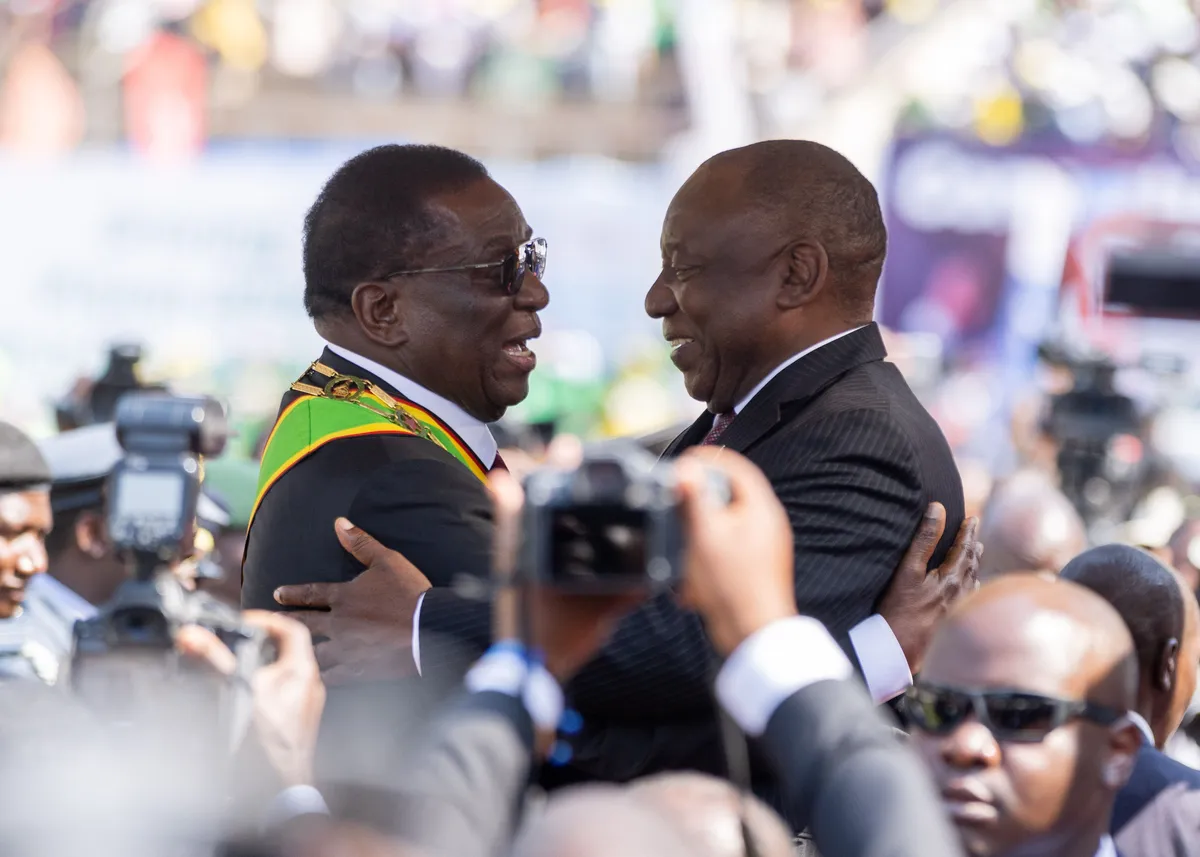
Cyril Ramaphosa made an unofficial visit to Zimbabwe on May 5, 2026 to meet President Emmerson Mnangagwa. The Democratic Alliance (DA) criticized this visit, claiming it supports a dictatorship amidst ongoing human rights abuses.
The DA’s Ryan Smith condemned the visit, stating it undermines South Africa’s constitutional values. He noted, “It is deeply telling that both President Ramaphosa and International Relations and Cooperation Minister Ronald Lamola remained deafeningly silent when President Mnangagwa and his regime arrested and detained Zimbabwean opposition leader Tendai Biti.” This silence raises questions about South Africa’s stance on human rights in the region.
The visit coincided with Zimbabwe’s ruling party advancing a Constitution Amendment Bill, which aims to consolidate power. The DA accused Ramaphosa of ignoring the deteriorating human rights situation in Zimbabwe. They highlighted that 90 percent of Zimbabweans live in poverty, exacerbating the humanitarian crisis.
Additionally, the presence of controversial Zimbabwean businessmen at the meeting raised concerns about corruption. Over a million Zimbabweans are believed to be living in South Africa illegally, a situation linked to the political climate in Zimbabwe.
The DA argues that Zimbabwe’s democratic backslide contributes to South Africa’s immigration crisis. Ryan Smith stated, “For as long as South Africa refuses to stand up and condemn dictators and human rights abusers on our continent, our country will forever be the only place of asylum for the refugees the ANC continues to create.” This statement underscores the complexities of regional politics.
Observers are concerned about how this visit will impact bilateral relations between South Africa and Zimbabwe. The international community is watching closely as developments unfold regarding Zimbabwe’s constitutional changes and human rights practices.