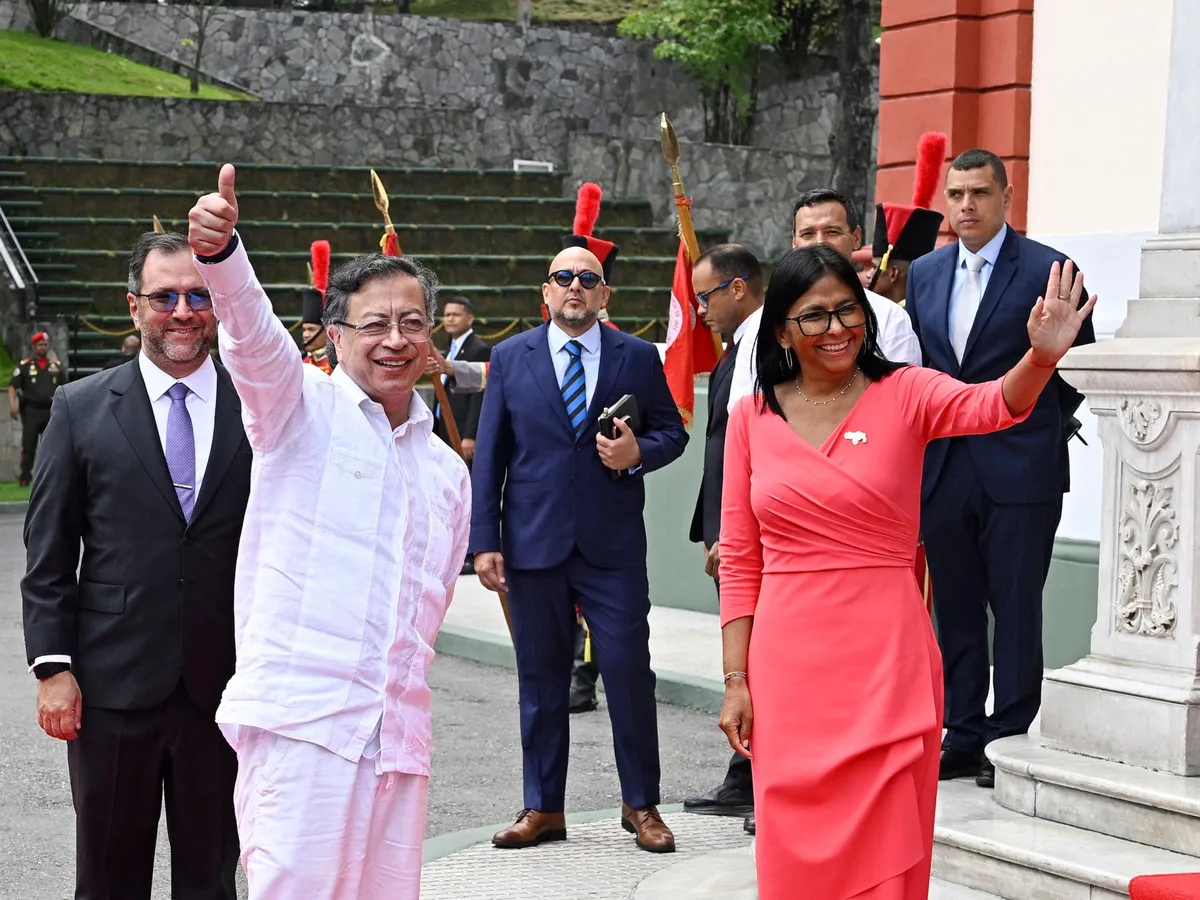
Gustavo Petro’s visit marks a significant diplomatic shift in Colombian-Venezuelan relations following Nicolás Maduro’s abduction. Petro became the first foreign leader to visit Venezuela since Maduro was taken by U.S. military forces on January 3, 2026.
Before this, relations between the two countries were strained. The U.S. government did not recognize Maduro as Venezuela’s legitimate leader. Drug trafficking and political prisoners complicated the situation further.
Petro met with Acting President Delcy Rodriguez to discuss security and military cooperation. Rodriguez confirmed agreements on joint military plans and intelligence-sharing mechanisms between Colombia and Venezuela.
Rodriguez stated, “Drug trafficking groups should know that we are taking decisive steps to combat these crimes.” This indicates a new approach to addressing drug trafficking along the 2,200-kilometre border shared between the two nations.
The U.S. operation to capture Maduro has drawn criticism. Petro called it an “assault on sovereignty” in Latin America. A U.S. soldier was charged for betting on the operation, having wagered $33,034 on its success.
Yet, Rodriguez has cooperated with U.S. demands, including halting oil exports to Cuba. This cooperation raises questions about the balance of power in Venezuelan politics.
The implications of this diplomatic shift are significant for both countries. It may alter how they manage issues like drug trafficking and political prisoners moving forward.
Experts suggest that increased collaboration could stabilize Colombian-Venezuelan relations, but uncertainties remain about the long-term effects of Maduro’s absence.
As both nations navigate this new landscape, their future interactions will be closely monitored by international observers.