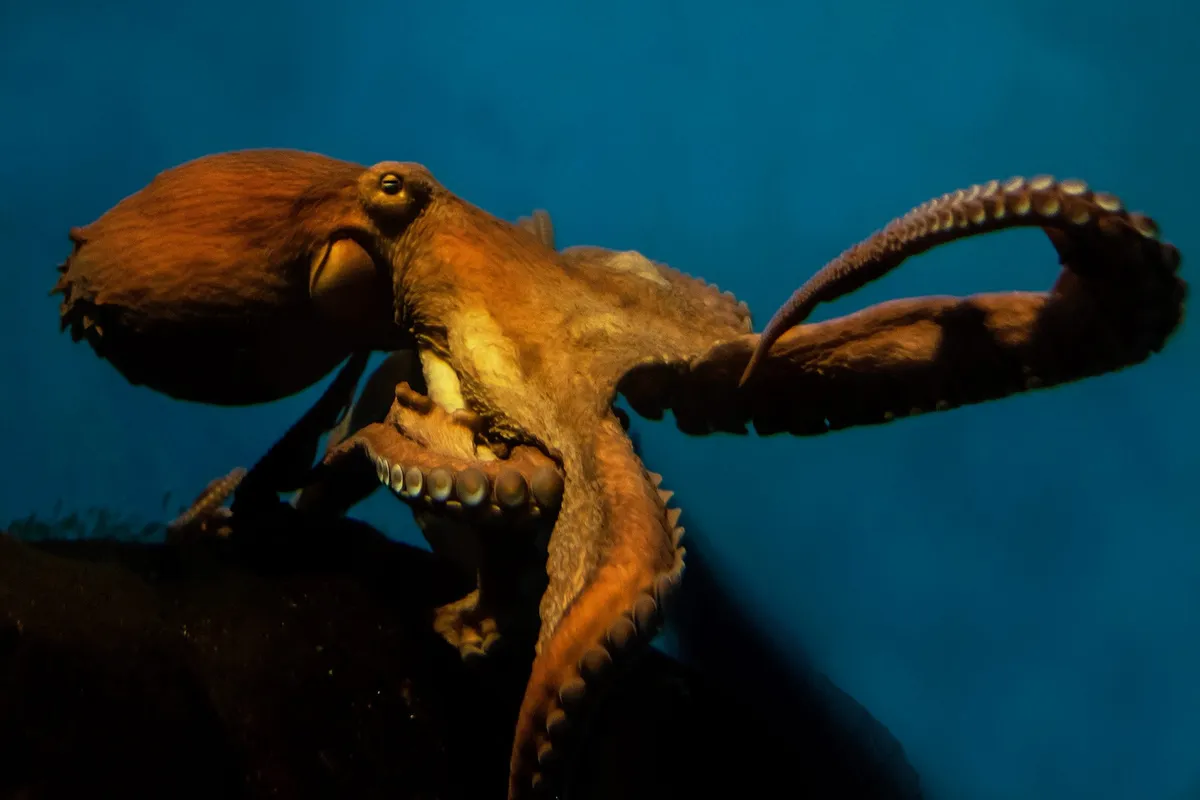
“I wasn’t expecting any octopus of this magnitude at all,” said researcher Fernando Ángel Fernández-Álvarez. New findings reveal that giant octopuses not only ruled the seas as apex predators during the late Cretaceous period but also exhibited signs of advanced intelligence.
The study, which focused on fossils from 100 million years ago, identified two extinct species of giant octopuses. These creatures could reach lengths of up to 60 feet—making them formidable marine predators alongside mosasaurs and sharks.
The research uncovered the largest jaws ever found for the species. The extent of wear on these jaws surprised researchers. “The most surprising finding perhaps was the extent of wear on the jaws,” said Yasuhiro Iba, another key researcher.
Fossils suggest that these octopuses likely preyed on hard-shelled animals like shrimp and lobsters. The fossil record for octopuses is rare because of their soft-bodied nature, making these discoveries particularly significant.
This study utilized digital fossil-mining techniques to analyze the remains. These methods allowed researchers to gather insights into octopus evolution and their role in ancient marine ecosystems.
Yasuhiro Iba noted, “Our findings suggest that the earliest octopuses were gigantic predators that occupied the top of the marine food chain in the Cretaceous.” This challenges previous notions about the capabilities of invertebrates.
Researchers argue that these findings provide direct evidence that invertebrates could evolve into intelligent apex predators. The implications for our understanding of marine ecosystems are profound.
As studies continue, scientists hope to uncover more about how these intelligent predators interacted with other marine life. The next phase of research will likely focus on additional fossil sites to expand on these groundbreaking discoveries.