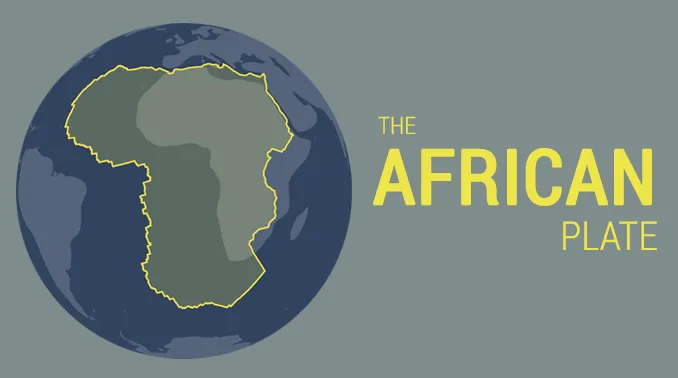
Scientists have discovered that the African continent is splitting apart faster than previously understood, with significant implications for the region’s geology and fossil record. The African Plate is undergoing tectonic activity that will eventually lead to ocean formation.
The East African Rift System is the active rift zone where the African Plate divides into the Nubian and Somali plates. This process began around 45 million years ago, with necking starting approximately 4 million years ago.
Key facts:
- The Turkana Rift has a crust thickness of only about 13 kilometers in the center, much thinner than previously thought.
- This thin crust will likely enter a phase called ‘necking’, leading to continental breakup.
- The East African Rift System is currently spreading at a rate of about 4.7 millimeters per year.
The Rovuma Transform Margin extends over 310 miles (500 km) and influences tectonic plate movement in East Africa. These geological processes are critical for understanding future changes in the region.
Christian Rowan stated, “Eastern Africa has progressed further in the rifting process than previously thought.” Dr. Jordan Phethean added, “These faults can act like railroad tracks controlling the future direction the tectonic plate moves in.” Such insights highlight the importance of monitoring these developments.
Additionally, favorable conditions have emerged for fossil preservation within this evolving landscape. This may offer new opportunities to study ancient life as geological processes continue to unfold.