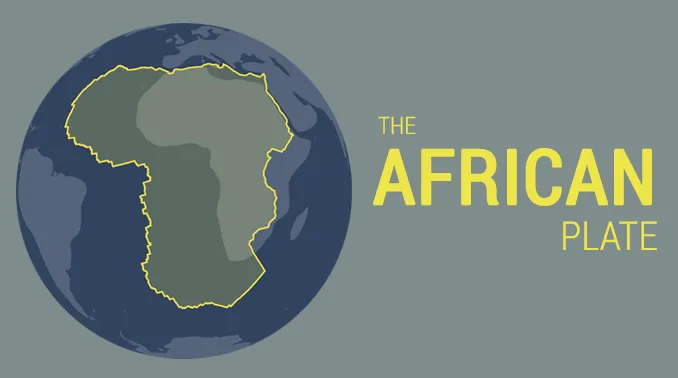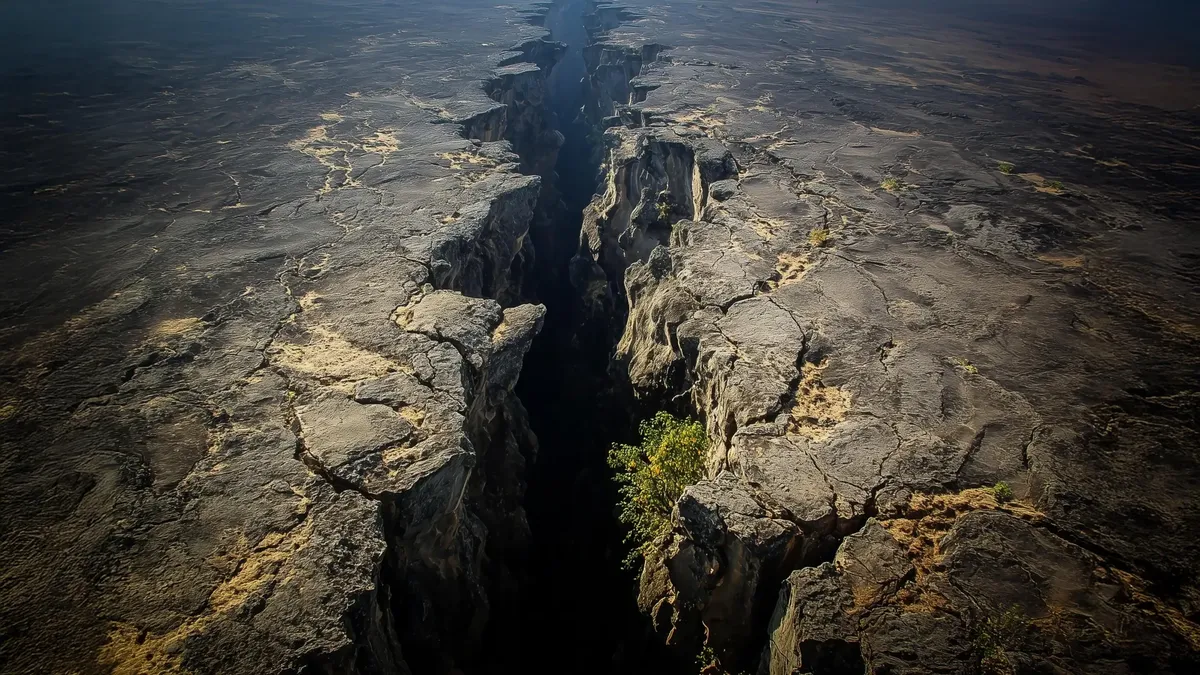
“Eastern Africa has progressed further in the rifting process than previously thought,” said Christian Rowan, a key researcher. Scientists have discovered that the Turkana Rift is closer to splitting apart and forming a new ocean than previously believed. This rift, located in Kenya and Ethiopia, is part of the East African Rift System.
The Turkana Rift began opening about 45 million years ago. It has been undergoing continental rifting for millions of years. The crust in the center of the Turkana Rift is only about 13 kilometers thick, while it exceeds 35 kilometers in thickness farther away. The African and Somali plates are currently moving apart at a rate of 4.7 millimeters per year.
The necking phase of the Turkana Rift started around 4 million years ago. This process was driven by volcanic activity. The region is unique as it is the only known active continental rift currently exhibiting necking. Researchers believe that continued rifting will eventually lead to oceanization, although this may take several million more years.
The Turkana Rift has also been significant for human evolution, producing over 1,200 hominin fossils, which account for about one third of all such finds in Africa. The temporal coincidence between the tectonic transition and fossil preservation suggests that this necking phase created critical conditions for fossil finds.
Anne Bécel stated, “We’ve reached that critical threshold of crustal breakdown.” This indicates that the Turkana Rift is nearing its critical breakup stage. The Afar region nearby already shows early signs of oceanic crust formation.
The research findings were published in the journal Nature Communications. As scientists continue to study this geological phenomenon, they aim to better understand the implications of these changes on both local ecosystems and human history.