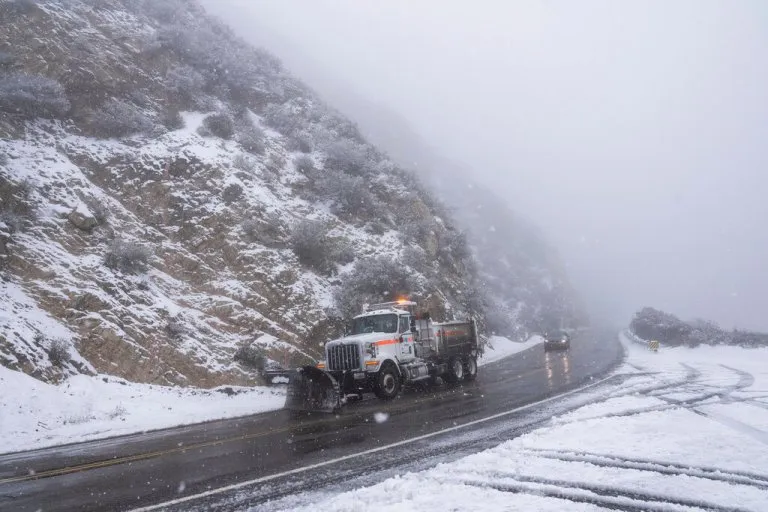
AccuWeather has announced that its Snow Warning Service has provided customers with significantly more advance notice and accurate warnings during the 2025-2026 winter season compared to the National Weather Service (NWS) and other sources. This development comes as the United States experiences a winter marked by historic snowstorms, emphasizing the importance of timely weather alerts.
During this winter season, AccuWeather’s customers received snow warnings, on average, more than 34 hours before snowfall began. This is a notable improvement, as AccuWeather provided 61% more advance notice than the NWS and other weather reporting entities. Nearly every snow warning issued by AccuWeather was communicated prior to the onset of snow, showcasing the service’s reliability and effectiveness in alerting the public.
In contrast, the NWS and other sources failed to provide advance notice or did not issue an advisory or warning 36% of the time, highlighting a significant gap in their forecasting capabilities. This discrepancy raises questions about the preparedness of communities relying solely on traditional weather services for timely information during severe winter weather.
AccuWeather’s accuracy extends beyond just advance notice; the service was found to be 19% more accurate on forecast snowfall accumulation compared to the NWS. The average snow forecast error reported by AccuWeather was just 0.52 inches, demonstrating a high level of precision in their predictions. Furthermore, AccuWeather was 36% more accurate regarding the forecast start time of snowstorms, with an average start time error of 2.38 hours.
Additionally, the service excelled in predicting when snow events would conclude, being 41% more accurate on the forecast end time, with an average end time error of 3.65 hours. This level of detail is crucial for individuals and businesses planning their activities around winter weather, as accurate timing can significantly impact travel and safety decisions.
AccuWeather’s approach to forecasting includes providing specific snow accumulation forecasts for paved surfaces, a feature not typically offered by the NWS. This specificity allows for better preparation for road conditions and safety measures, particularly in urban areas where snow accumulation can disrupt daily life.
As the winter season progresses, AccuWeather meteorologists are urging the public to stay informed about severe weather threats. Meteorologist Elizabeth Danco noted, “Severe weather threats this week will span more than 1,600 miles, from the Plains to the Great Lakes,” indicating the widespread impact of winter storms. She also warned that strong storms may slow travel on highways, cause airport delays, and create ripple effects for businesses and commuters.
With the heart of the spring severe weather season approaching, Danco emphasized the importance of reviewing safety plans and ensuring access to multiple warning systems, including alerts that can wake individuals at night. As AccuWeather continues to lead in winter weather forecasting, the need for reliable and timely information remains paramount for public safety and preparedness.