Key moments
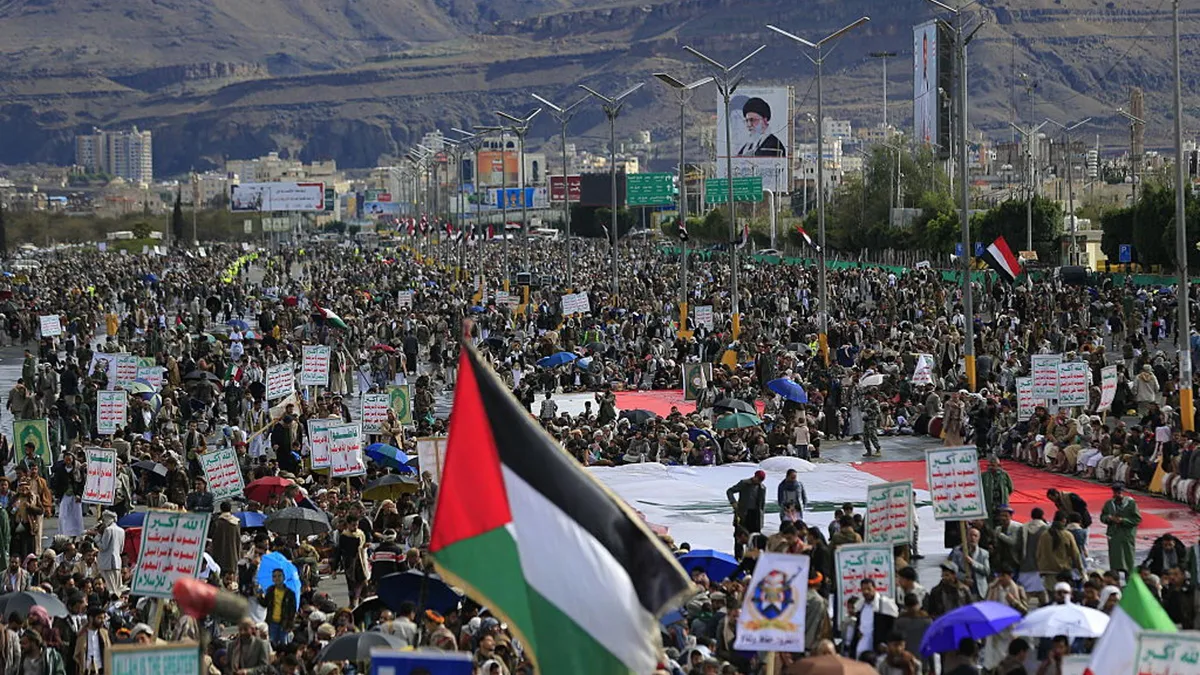
On March 28, 2026, Yemen’s Houthis launched a missile strike against Israel, marking their first intervention in the ongoing U.S.-Israeli-led war against Iran. This military operation was confirmed by Houthi spokesman Yahya Saree, who stated, “The Yemeni Armed Forces … have carried out the first military operation using a barrage of ballistic missiles targeting sensitive Israeli military sites.” The strike represents a significant escalation in the conflict, which has already seen considerable loss of life and geopolitical tension.
The missile strike targeted sensitive military installations within Israel, although specific details regarding the extent of damage or casualties have not yet been disclosed. The U.S. Central Command had confirmed the arrival of the 31st Marine Expeditionary Unit in the Middle East just a day prior, on March 27, 2026, indicating a heightened military presence in the region.
In the broader context of the conflict, Iranian authorities have reported over 1,900 deaths in Iran due to the ongoing hostilities, while 19 deaths have been confirmed in Israel. This escalation follows a series of U.S. and Israeli airstrikes against Iranian targets that began on February 28, 2026, further complicating the already volatile situation in the region.
The Bab el-Mandeb Strait, a crucial maritime passage, accounts for 12% of seaborne oil trade and 8% of liquefied natural gas trade as of the first half of 2023. The strategic importance of this area has heightened tensions, particularly in light of the recent military actions. Following the missile strike, U.S. crude oil prices surged by 5.46%, closing at $99.64 per barrel, reflecting the market’s reaction to the escalating conflict.
In response to the ongoing hostilities, Saudi Arabia’s East-West pipeline is reportedly operating at full capacity, pumping 7 million barrels of oil per day as of March 2026. This move underscores the kingdom’s efforts to stabilize oil supplies amid rising tensions in the region.
Additionally, Iran has intensified its military actions, firing six ballistic missiles and 29 drones at U.S. troops stationed at Saudi Arabia’s Prince Sultan Air Base, resulting in injuries to at least 15 troops. This escalation highlights the increasing risks faced by U.S. forces in the region as the conflict continues to unfold.
In light of these developments, Maersk, a major shipping company, confirmed that all crew members aboard their vessels are safe and accounted for, stating, “We are pleased to confirm that all Maersk crew are safe and accounted for and no Maersk vessels or cargo have been affected.” Meanwhile, U.S. Senator Marco Rubio has indicated that the objectives of the Trump Administration in Iran may have been achieved, suggesting that the war could end within a four to six-week timeline initially set by the White House. However, Iranian officials have denied engaging in any negotiations, leaving the future of the conflict uncertain.
Details remain unconfirmed regarding the full impact of the missile strike and subsequent military actions, but the situation in Yemen and the surrounding regions continues to evolve rapidly, with potential implications for global security and energy markets.