For the third occasion in three T20 World Cups, England will face India in the semi-finals, following the co-hosts’ victory over West Indies in what essentially served as a quarter-final on Sunday night, securing their spot in the final four and eliminating their rivals.
Sanju Samson, who was dropped from the squad just before the tournament but was brought back after India’s disappointing Super 8s loss to South Africa, remarkably found his form again, remaining not out at 97 as he batted through the innings. In pursuit of 196, the co-hosts appeared to be in a strong position with the 31-year-old at the wicket, and it was only fitting that Samson hit the winning runs, sending his 50th ball over mid-on to secure a five-wicket victory with four balls to spare.
In the match against India, the West Indies began their innings with Roston Chase opening for the first time in Twenty20 internationals. He set a strong tone with partnerships of 68 runs off 53 balls alongside Shai Hope, and 34 runs off 16 balls with Shimron Hetmyer. The latter partnership was cut short when Jasprit Bumrah took both wickets in a single over. Additionally, Jason Holder and Rovman Powell contributed significantly, adding 76 runs in just 35 balls. However, the innings was marred by Hope’s slow performance, scoring only 32 runs off 33 balls, along with several fielding mistakes, including three dropped catches.
On Thursday in Mumbai, India and England will face off, aware that in the previous two tournaments, the team that triumphed in their matchups has gone on to secure the championship, with England winning in Adelaide in 2022 and falling short in Guyana two years prior.
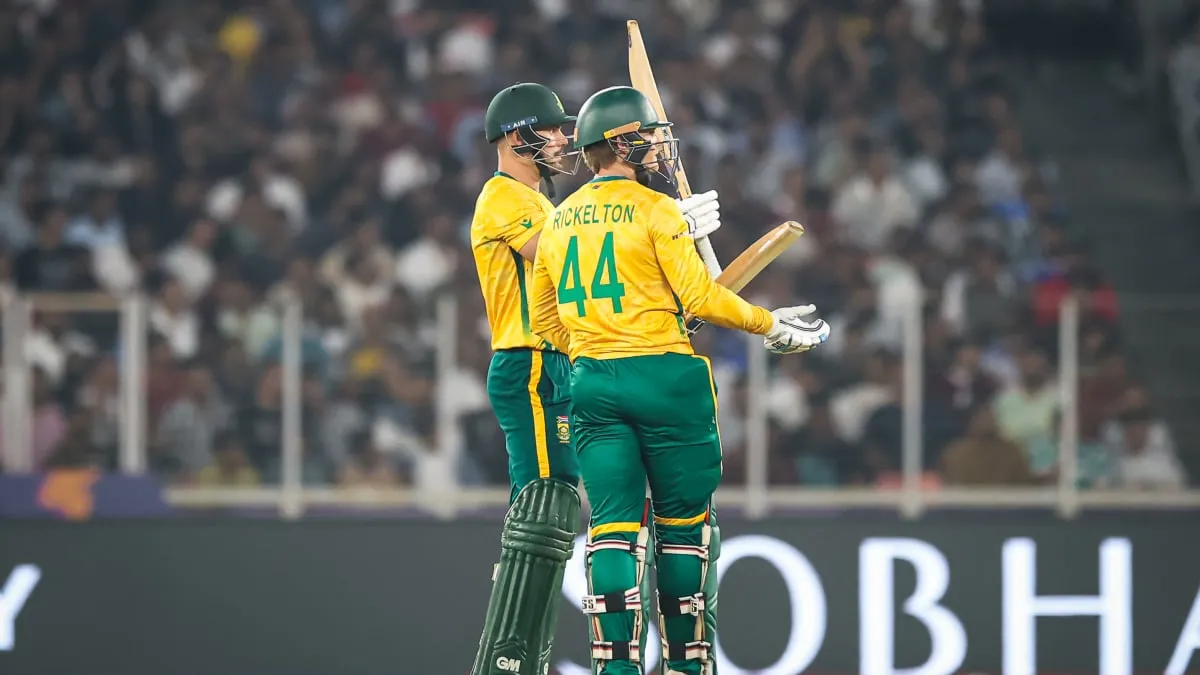
The other semi-final, scheduled for Wednesday, will feature New Zealand, who finished as runners-up in England’s Super 8s group, against South Africa, which secured the top position in their group by defeating Zimbabwe by five wickets in Delhi. The two teams also faced each other during the initial group stage, where South Africa won by seven wickets, maintaining their perfect record against the Black Caps in five T20 World Cup meetings, although they had not clashed in 12 years prior to this tournament.
The weekend concluded with us finally learning not just who will compete in the semi-finals, but also the locations of those matches. The chance of relocating a semi-final, and possibly the final, to Colombo was eliminated when Pakistan, needing a decisive victory over Sri Lanka on Saturday, won by a mere five runs. However, due to the uncertainty surrounding the schedule, tickets were only made available for purchase last Tuesday. Simultaneously, and with less than two weeks’ notice, ticket sales for two finals in different countries were also initiated.
On Friday, England wrapped up their final Super 8s match and, despite the results from the initial two rounds of games in the other group being as close as they could get to a clear outcome, they found themselves waiting in Colombo for two days to receive confirmation on the location of their semi-final.
India’s triumph sets them up for a semi-final clash against England on Thursday. Image credit: Sahiba Chawdhary/Reuters
The uncertainty was amplified by the International Cricket Council’s choice to avoid scheduling the final round of matches in each group at the same time, which would have not only enhanced the sporting integrity but also permitted all four games to occur on the same day. Instead, each match was assigned its own prime-time broadcast slot, resulting in a spread over three days.
Some may find it frustrating that India was aware that only a reunion with Pakistan could have altered their semi-final location from Mumbai, yet not every element of co-hosting has worked in their favor. To please their supporters, they have played their initial seven matches across six different cities, while the other semi-finalists—England, New Zealand, and South Africa—have played in four, three, and two cities respectively. If they advance to the final, the Proteas will have participated in six out of nine matches at the venue for the final, the Narendra Modi Stadium in Ahmedabad, and if India truly aimed to tilt the odds in their favor, those would have been the matchups they desired.
For viewers following the tournament on TV, the intricacies of these arrangements may seem insignificant, but for those present on-site, tasked with coordinating logistics to be in two or even three cities at once before ultimately canceling all but one, the organization of the tournament likely appears ridiculous and puzzling, with costly repercussions. This also applies to the hoteliers in the host cities who will face a surge of last-minute cancellations, as well as those responsible for organizing staffing, security, and catering for matches that will not take place. In five years, India is set to co-host a 50-over World Cup alongside Bangladesh, and they will find themselves in a similar situation once more.