Before the Artemis II mission, the landscape of human space exploration had remained largely unchanged for over 50 years. The last human lunar venture, Apollo 17, took place in 1972, and since then, the dream of returning to the moon had been relegated to the realm of science fiction for many. Expectations were high for the Artemis program, which aimed to reinvigorate lunar exploration and set the stage for future missions to Mars. However, the prospect of a diverse crew, particularly one that included a Black astronaut in a leading role, was still a distant hope for many.
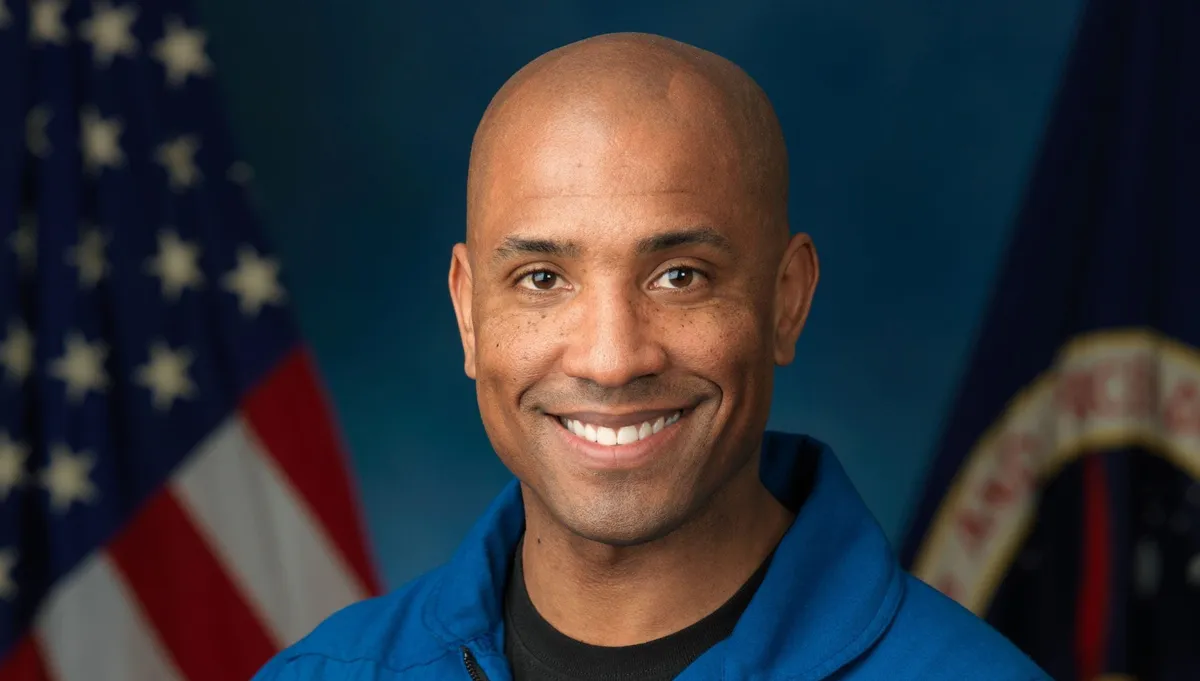
On April 10, 2026, everything changed. Victor Glover, aboard the Artemis II spacecraft, became the first Black astronaut to pilot a mission around the moon. This historic moment not only marked a significant milestone for NASA but also represented a breakthrough in representation within the space community. The Artemis II crew completed a flyby of the moon, traveling a staggering 250,000 miles from Earth, and returned safely after a nine-day mission, surpassing the distance traveled by Apollo 13.
The immediate effects of Glover’s achievement were profound. For many, his presence aboard the Artemis II mission served as a validation of dreams long held by young Black individuals aspiring to careers in science, technology, engineering, and mathematics (STEM). Glover himself expressed immense gratitude upon returning, stating, “Even bigger than my challenge trying to describe what we went through, the gratitude of seeing what we saw, doing what we did, and being with who I was with, it’s too big to be in just one body.” His words resonated deeply with those who viewed his journey as a beacon of hope.
Experts have noted that Glover’s journey is not just a personal triumph but a pivotal moment for NASA and the broader narrative of diversity in space exploration. Christina Koch, a fellow astronaut, remarked, “Earth is a lifeboat in the vast blackness of space,” emphasizing the importance of unity and representation in the face of the unknown. Glover’s role in Artemis II sets the stage for future Artemis missions, including a planned moon landing in 2028, which aims to further diversify the crew and expand the reach of human exploration.
In addition to the technical achievements of the mission, Glover’s journey has sparked conversations about the importance of representation in all fields. His success is seen as a source of inspiration for young Black dreamers, demonstrating that barriers can be broken and that space is a frontier open to all. Glover’s journey is a testament to the progress made in the fight for equality and representation in STEM fields.
As the world reflects on this historic mission, the implications of Glover’s achievement extend beyond the realm of space exploration. It serves as a reminder of the importance of diversity in all areas of society and the potential for change when barriers are dismantled. The Artemis II mission not only reinvigorates interest in lunar exploration but also paves the way for future generations to dream bigger and reach higher.
While the success of the Artemis II mission is celebrated, details remain unconfirmed regarding the specific crew composition for future missions and how NASA plans to build on this momentum. However, the significance of Victor Glover’s role in this mission will undoubtedly inspire countless individuals for years to come.