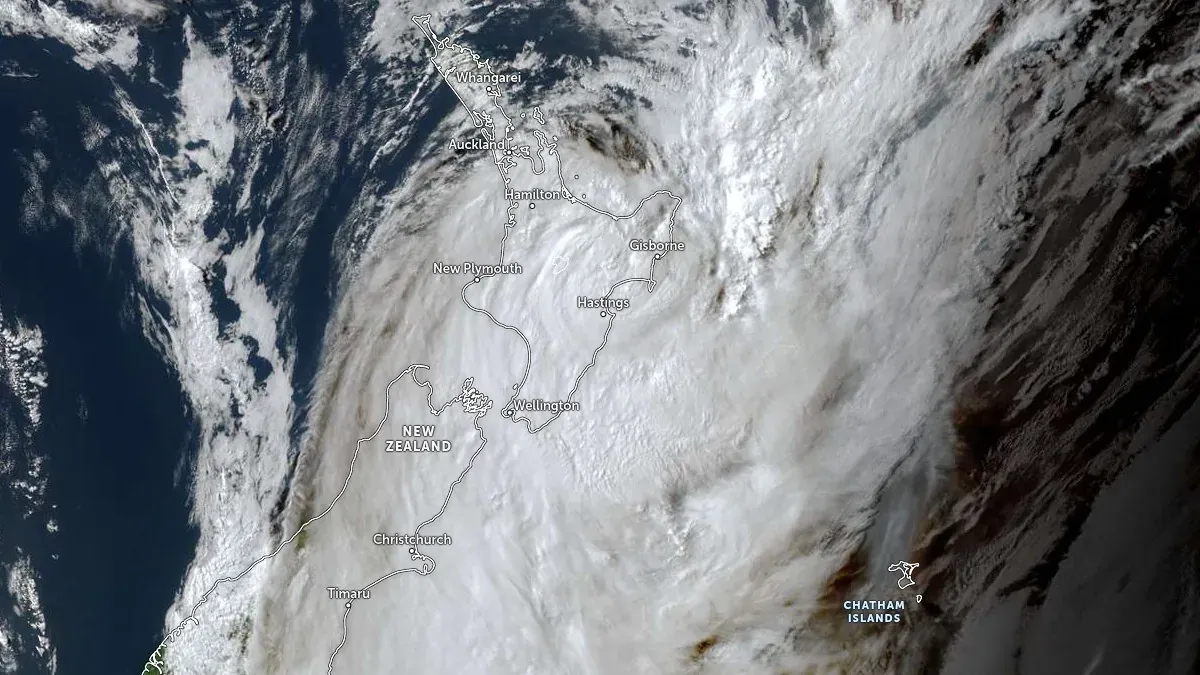
Before the arrival of Tropical Cyclone Vaianu, expectations were high regarding its potential impact on New Zealand’s North Island. As the cyclone tracked unusually far south, authorities prepared for severe weather conditions, including strong winds and heavy rainfall. The Fiji Meteorological Service had confirmed the cyclone’s Category 3 intensity, raising concerns about possible widespread damage.
On April 12, 2026, the situation changed dramatically when Cyclone Vaianu made landfall near the Māketū Peninsula in the Bay of Plenty shortly after 14:00 LT. The cyclone brought damaging winds and heavy rain, with Great Mercury Island recording a peak wind gust of 133 km/h (83 mph). The Pinnacles weather station reported an astonishing 332 mm (13.1 inches) of rain within 24 hours, leading to significant flooding in various regions.
As the cyclone approached, authorities issued evacuation orders for 270 households in Ōhope and Thornton, highlighting the immediate threat posed by the storm. Power outages affected thousands of customers across parts of the Bay of Plenty and Coromandel, further complicating the situation for residents. Reports indicated that the main issues included damage to shelter belts, fallen trees, and some building damage, with only minor impacts on the kiwifruit industry despite initial fears.
Experts from New Zealand Kiwifruit Growers Incorporated noted that around 40% of Gold and 10% of Green kiwifruit had already been harvested before the cyclone struck. They stated, “Reports to date indicate that the main issues have been damage to shelter belts, trees falling over, power outages, and some building damage, with only the odd block of kiwifruit affected.” This assessment provided some reassurance to the agricultural sector, which had braced for more severe consequences.
As the cyclone moved away from New Zealand, the situation began to improve. The MetService lifted cyclone-related Watches and Warnings, signaling a return to more stable weather conditions. Residents across the country experienced a noticeable drop in wind speeds, with periods of sunshine breaking through earlier rainfall. However, residual hazards remained, including a Heavy Rain Watch, indicating that some areas were still at risk of flooding.
Despite the cyclone’s weakening prior to landfall, flooding persisted in low-lying areas due to blocked drainage systems. Restoration efforts were ongoing in affected communities, as local authorities worked to address the aftermath of the storm. As the cyclone moved in a south-easterly direction away from Fiji, the weather conditions improved in that region as well, with authorities lifting gale warnings for marine areas.
In summary, while Tropical Cyclone Vaianu brought significant weather impacts to New Zealand’s North Island, the overall damage was less severe than initially anticipated. The timely preparations and the cyclone’s weakening before landfall played critical roles in mitigating the potential devastation. Nevertheless, the event serves as a reminder of the unpredictable nature of tropical cyclones and the importance of preparedness in the face of such natural disasters.