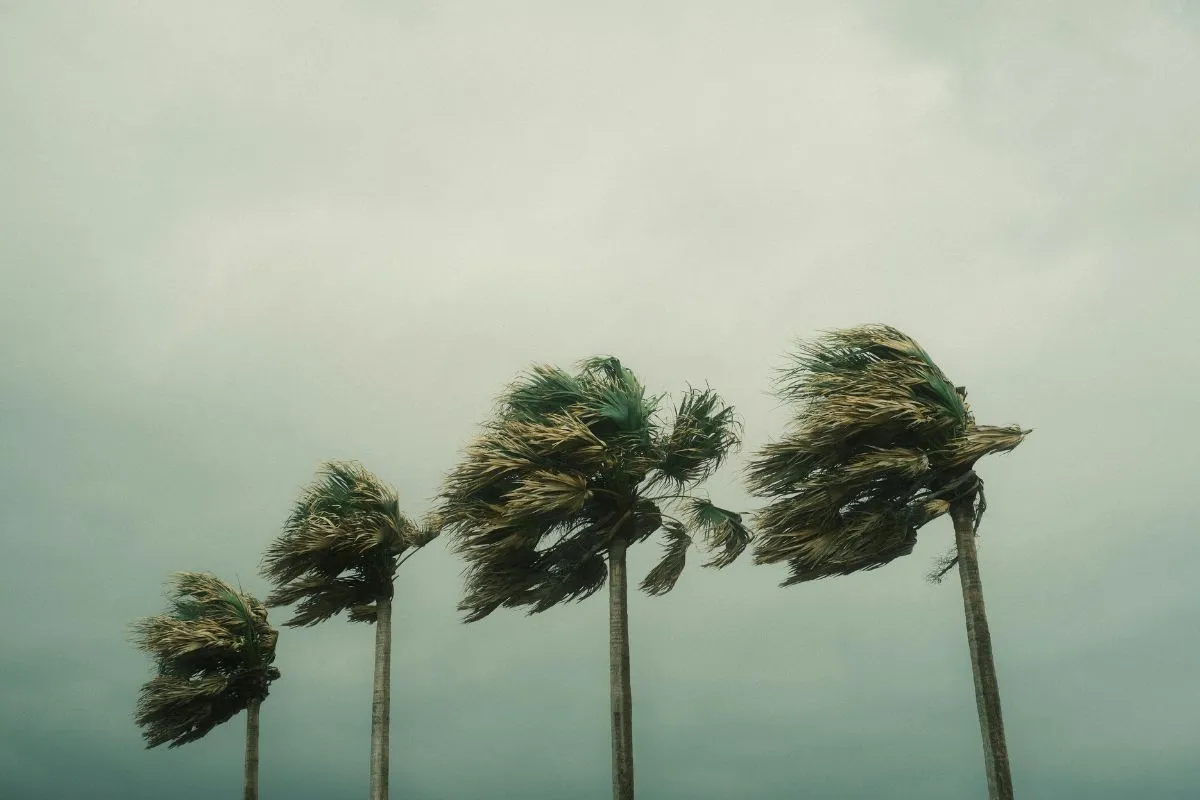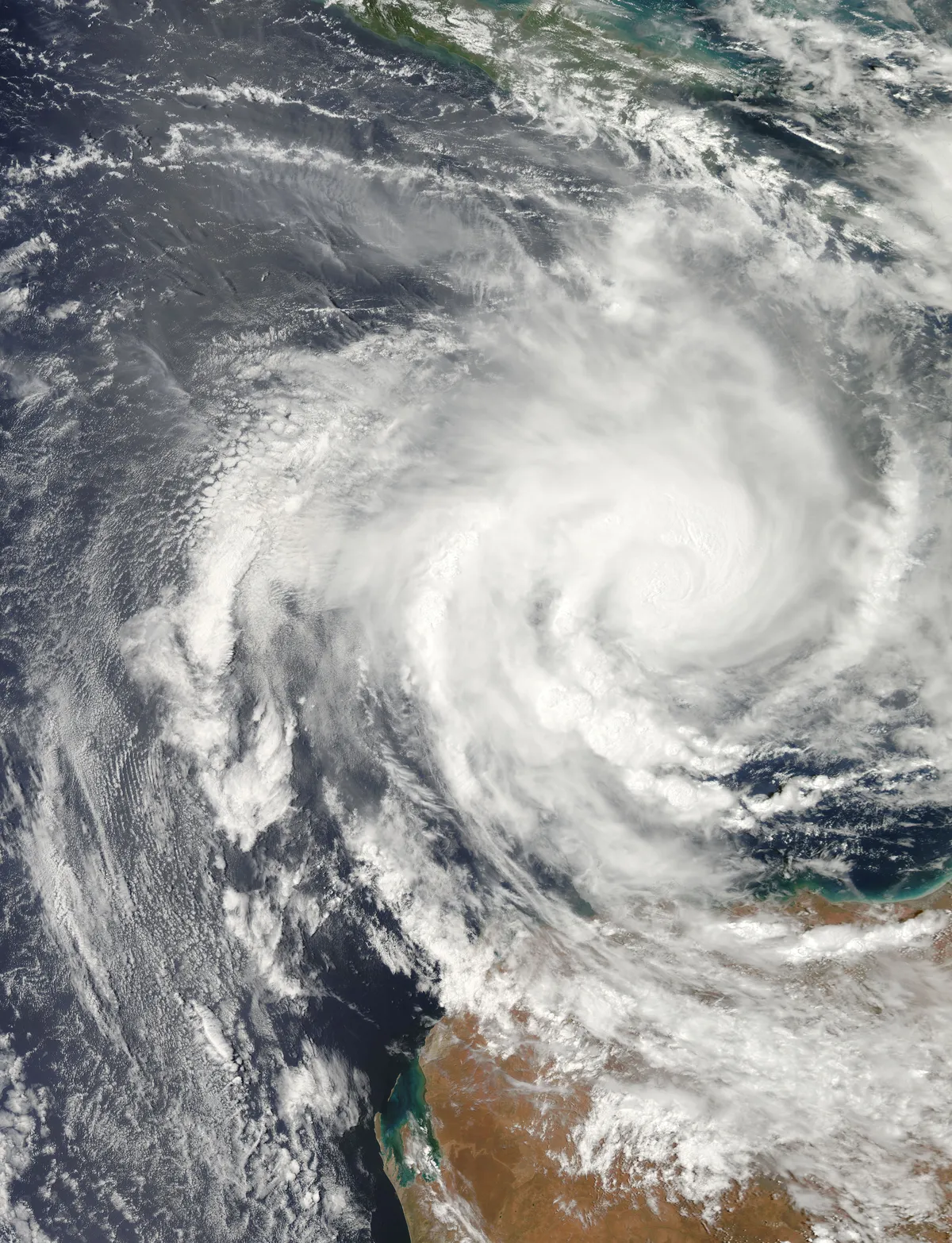
On March 27, 2026, Tropical Cyclone Narelle made landfall in Shark Bay, Western Australia, approximately 900 kilometers north of Perth. Just before the cyclone’s arrival, the skies turned a striking blood red, a phenomenon attributed to an iron-infused dust storm.
The eerie red hue was caused by strong winds that kicked up iron-rich soil into the atmosphere, a process known as ‘mie scattering’. Video footage captured the dust storm engulfing Shark Bay, creating an unsettling atmosphere as residents prepared for the cyclone.
Jessica Lingard, a local resident, remarked, “Narelle just whipped, picking up the dust from the landscape and pushing it through places like Shark Bay ahead of the cyclone.” As the storm approached, the Shark Bay Caravan Park reported, “Incredibly eerie outside, and everything is covered in dust. Not a lot of wind yet.”
By March 26, Narelle had downgraded to a subtropical system but still posed significant risks. The cyclone had previously crossed into Western Australia after striking far north Queensland and the Northern Territory, making it the first storm system in over 20 years to make landfall in three of Australia’s states and territories.
The impact of Narelle was severe, particularly in Carnarvon, where 80% of the banana crop was destroyed. In response to the devastation, Western Australia Premier Roger Cook announced one-off payments of up to $4,000 for families whose homes were destroyed.
As the dust settled, the skies returned to their normal color, but the effects of the storm lingered. Local residents continued to clear dust from their properties, with one noting, “What a difference 48 hours makes. We are still clearing dust from everywhere.”
This sequence of events highlights the significant impact of Tropical Cyclone Narelle on the region, both environmentally and economically. The unusual red sky phenomenon serves as a reminder of the powerful forces of nature and their ability to reshape landscapes and lives.