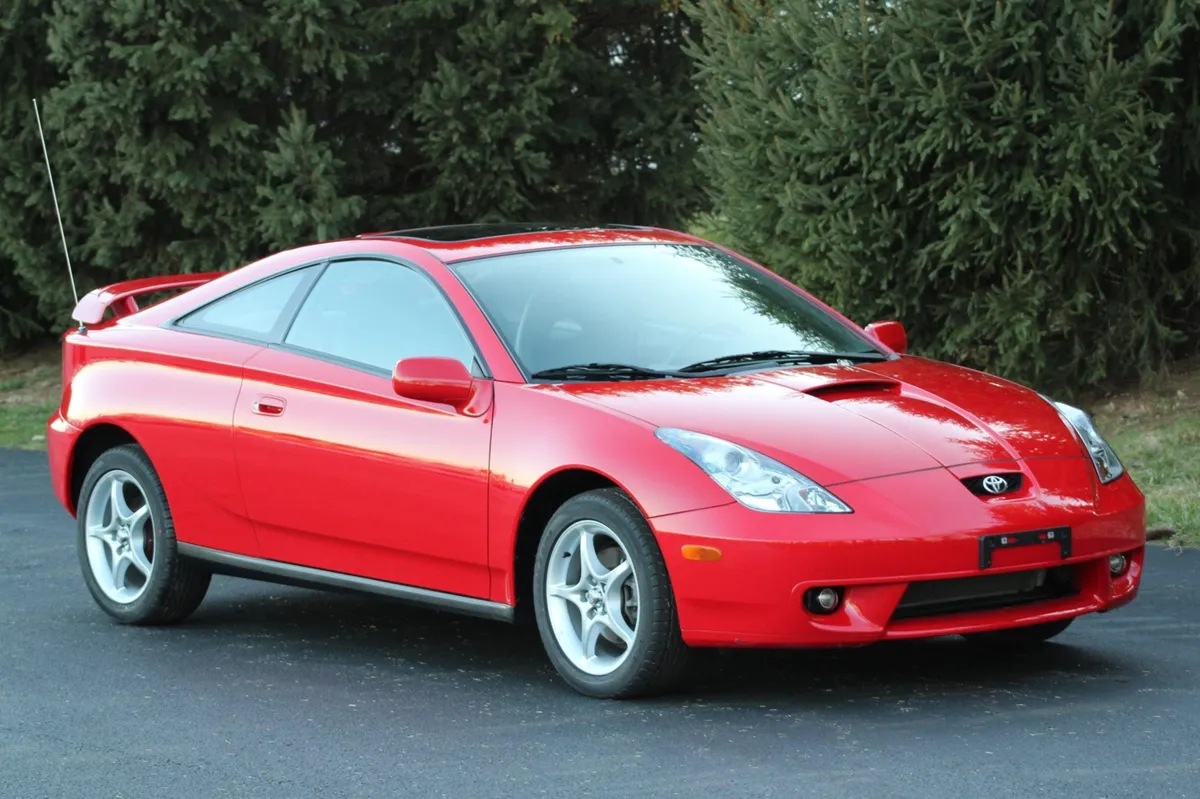
The question of how the Toyota Celica has maintained its status as a beloved sports car among enthusiasts can be answered by examining its engineering innovations and performance capabilities. Central to this legacy is the 2ZZ-GE engine, which was launched in 1999 in collaboration with Yamaha and featured advanced technology that appealed to driving aficionados.
The 2ZZ-GE engine is notable for its implementation of VVTL-i, Toyota’s version of variable valve timing and lift. This technology allowed the engine to produce between 180 and 190 horsepower, with a remarkable redline sitting between 8,200 and 8,400 RPM. Such specifications positioned the Celica GT-S, which utilized this engine from 2000 to 2005, as a competitive option in the sports car market.
In addition to the Celica, the 2ZZ-GE engine found its way into other Toyota models, including the Corolla XRS from 2005 to 2006 and the Matrix XRS from 2003 to 2006. This versatility showcased Toyota’s commitment to performance across its lineup, further solidifying the Celica’s reputation as a driver-focused vehicle.
Another significant engine in the Celica’s history is the 3S-GTE, a 2.0-liter turbocharged inline-four that was used in various Toyota models from the mid-1980s until 2007. This engine produced 190 horsepower and 190 lb-ft of torque in the 1988 Toyota Celica All-Trac Turbo, demonstrating the brand’s engineering prowess in performance vehicles. The 3S-GTE was also utilized in the MR2 Turbo from 1991 to 1995, showcasing its reliability and performance across multiple platforms.
The 2ZZ-GE engine represents a pivotal moment in Toyota’s engineering philosophy, where the company leaned further into driver-focused design than usual. This focus on performance and technology has allowed the Celica to cultivate a loyal following among car enthusiasts, who appreciate its blend of power and handling.
As the automotive landscape continues to evolve, the future of the Toyota Celica remains uncertain. While the model has not been in production since 2005, its legacy persists in the hearts of fans and collectors. The advancements made during its production have influenced subsequent models and continue to inspire new generations of performance vehicles.
Details remain unconfirmed regarding any potential revival of the Celica nameplate, but the impact of its engineering and design continues to resonate within the automotive community. As enthusiasts reflect on the Celica’s storied past, they also look forward to what innovations may emerge in the future, inspired by the legacy of this iconic sports car.