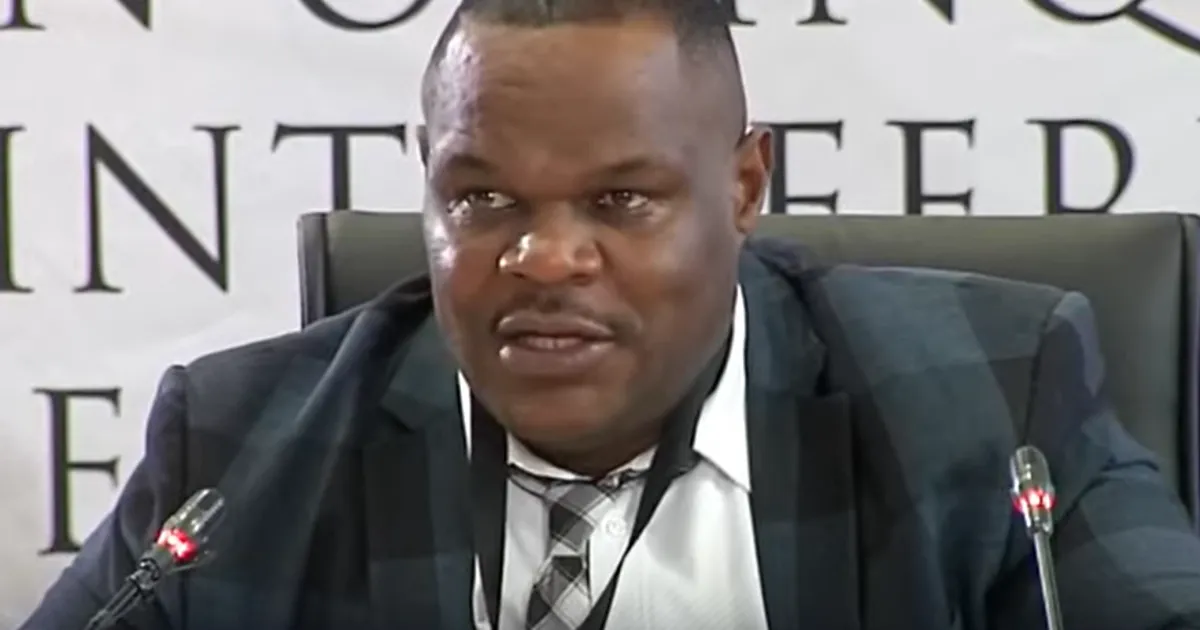
“A man that he gave money to. A man that he bought expensive Macallan whiskey for. A man that it is alleged he bought eight bakkies for the EFF and Julius leading up to the elections of 2024,” stated Kenny Kunene, shedding light on the controversial connections between political figures and alleged crime bosses.
The remarks come amid ongoing scrutiny of Sergeant Fannie Nkosi, who has been accused of lying and being an uncooperative witness before the Madlanga Commission of Inquiry. This commission is investigating police criminality and political interference, raising questions about the integrity of law enforcement in South Africa.
Nkosi is suspected of acting as a middleman between suspected crime bosses and government officials, a role that has drawn significant attention in the wake of the inquiry. The commission’s focus on Nkosi highlights the broader implications of corruption within the police force.
Kunene further alleged that Julius Malema relied on the late taxi mogul Mswazi for protection and resources. Mswazi, a wealthy and influential figure in Pretoria’s taxi industry, emerged as a central character in the inquiry following his death in January 2024.
“Galito Sibande was a runner of Mswazi. Mswazi adopted him like his son… Molefe and Mswazi paid for Galito’s rental and bought him an Isuzu,” Kunene added, indicating the deep ties between political figures and criminal elements.
These allegations have sparked discussions about the ethical responsibilities of politicians and their relationships with individuals involved in criminal activities. Kunene accused Malema of hypocrisy regarding his relationship with Mswazi, questioning the honor of those who benefit from such connections.
“He says Mswazi was involved in assassinations. How do you say that about a person who protected you? This is a man that shows no honor,” Kunene remarked, emphasizing the contradictions in Malema’s statements.
The ongoing Madlanga Commission of Inquiry continues to unravel the complex web of relationships between crime and politics in South Africa, with Nkosi’s case serving as a focal point for these discussions.
As the inquiry progresses, further developments are anticipated, particularly regarding Nkosi’s role and the implications it may have for law enforcement and political accountability in the country.
Details remain unconfirmed.