How it unfolded
The Royal Maundy service, a significant event in the British royal calendar, took place on April 2, 2026, at St Asaph Cathedral in Wales. This marked a historic moment as it was the first time in the 800-year history of the Royal Maundy service that the event was held in North Wales. The service, which occurs annually on Maundy Thursday, the Thursday before Easter, is a tradition that dates back to 600AD, where the Sovereign presents Maundy Money to individuals who have made exceptional contributions to their communities.
On this occasion, King Charles III and Queen Camilla attended the service, where the King presented Maundy recipients with two purses containing Maundy money. A total of 154 individuals, comprising 77 men and 77 women, received the money, symbolically equal to the King’s age of 77. The recipients were honored for their outstanding service to their communities, a recognition that underscores the importance of community engagement and charity in British society.
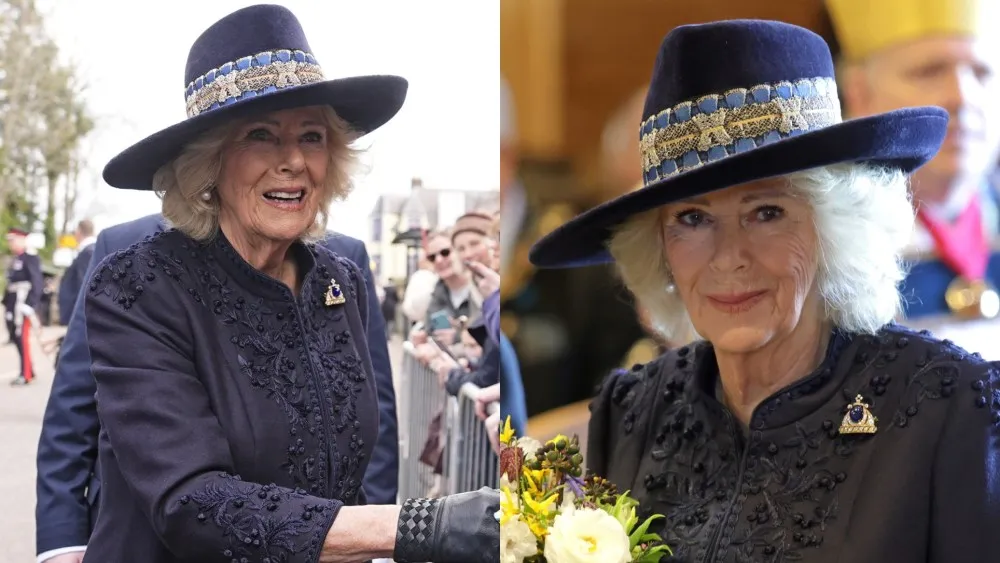
Queen Camilla wore an embroidered ensemble by Christian Dior, complemented by a sapphire and diamond brooch from Queen Elizabeth II’s collection. The choice of sapphire, long associated with loyalty and steadfastness, added a ceremonial significance to her attire. Justin Daughters, a fashion expert, noted, “The choice of sapphire, long associated with loyalty and steadfastness, set within a crown motif creates a powerful visual narrative, particularly for a ceremonial occasion such as Maundy Thursday.”
The Maundy money presented included a white purse containing specially minted silver Maundy coins, while the red purse held a £5 coin and a 50p coin. The red coin celebrated the King’s Trust, emphasizing the royal family’s commitment to charitable causes. The distribution of Maundy Money is traditionally assisted by the Lord High Almoner, further highlighting the ceremonial nature of the event.
As part of the royal family’s engagement with the public, photographs from past Maundy services were shared on their official Instagram account, showcasing the long-standing tradition and its evolution over the years. The Royal Maundy service not only serves as a means of honoring individuals but also as a reminder of the royal family’s connection to the community.
In attendance were other members of the royal family, including Prince William, Kate Middleton, and their children, Prince George and Princess Charlotte, aged 12 and 10 respectively. Their presence at such events reinforces the continuity of royal traditions and the importance of family in public life.
The Royal Maundy service remains a poignant reminder of the values of service and community, deeply rooted in British history. As the tradition continues to evolve, it reflects the changing dynamics of society while maintaining its core purpose of recognizing those who contribute positively to their communities.