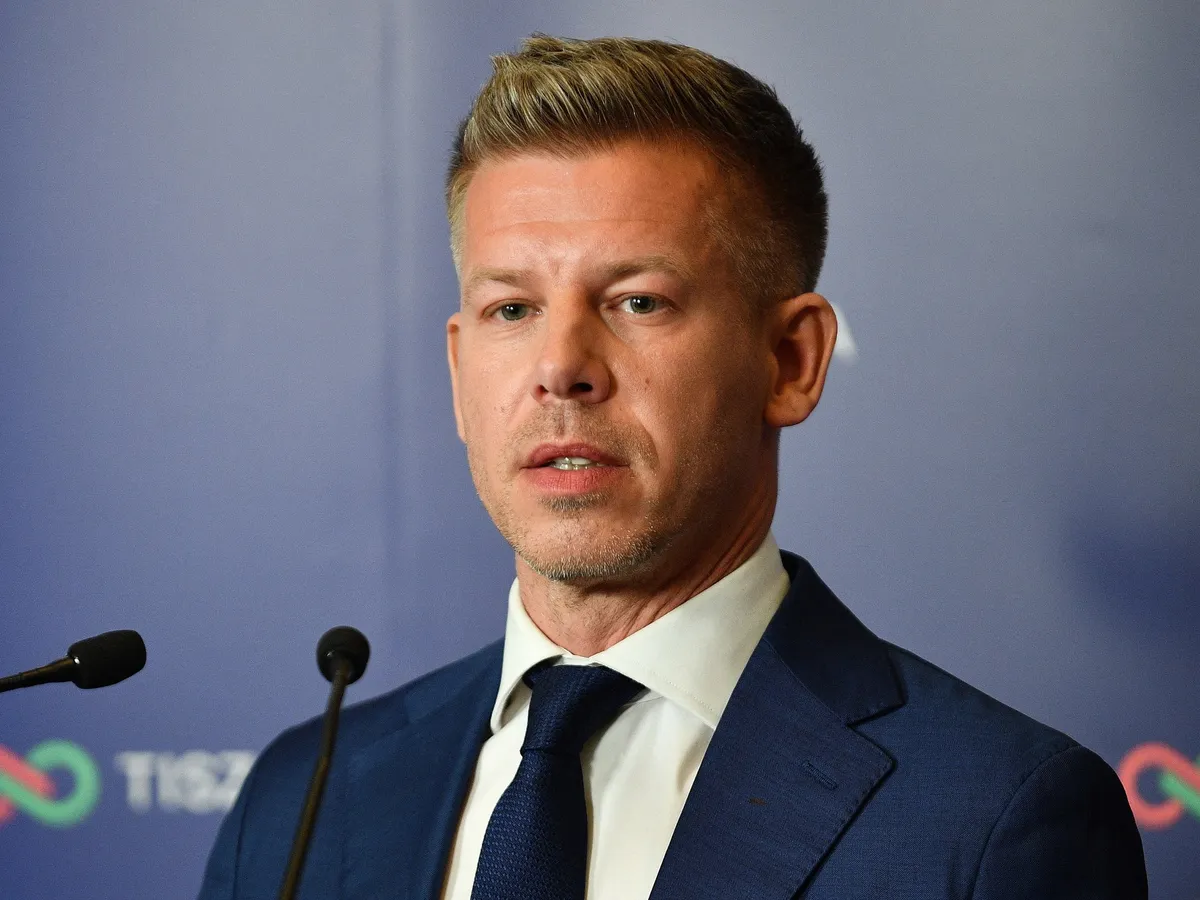
Peter Magyar’s Tisza party has won a two-thirds majority in Hungary’s parliamentary elections, securing 138 seats in the 199-seat parliament and garnering 53.6% of the vote. This victory marks a significant shift in the country’s political landscape, ending Viktor Orban’s 16-year rule.
In the elections held on April 13, 2026, Orban’s Fidesz party managed to secure only 55 seats with 37.8% of the votes, a stark contrast to Magyar’s sweeping success. Magyar, born in Budapest in March 1981, has positioned himself as a reformist leader, promising to revive Hungary’s economy and improve relations with the European Union.
Magyar’s rise to power is notable not only for its electoral success but also for its roots in personal and political turmoil. His victory was influenced by a scandal involving his former wife, Judit Varga, who accused him of using a secret recording against her for political gain. Varga stated, “Peter Magyar made a secret recording of his former spouse, me, in our home and now used this to achieve his political goals. He is not worthy of anybody’s trust.”
In response to his victory, Magyar declared, “Tonight, truth prevailed over lies,” emphasizing a commitment to transparency and accountability in governance. He also remarked, “Today, we won because Hungarians didn’t ask what their homeland could do for them; they asked what they could do for their homeland,” reflecting a call to national unity.
Magyar, who has a law degree from Pazmany Peter Catholic University, was previously a staunch loyalist of Orban before becoming his opponent. His political journey has been marked by a shift towards a pro-European Union stance, as he plans to establish a new political party aligned with EU values.
One of the key aspects of Magyar’s platform is his commitment to reducing Hungary’s dependence on Russian energy by 2035, a move that aligns with broader European energy security goals. This pledge is particularly significant given the current geopolitical climate and Hungary’s historical reliance on Russian energy sources.
As the political landscape in Hungary shifts, many are watching closely to see how Magyar will navigate the challenges ahead, including economic reform and international relations. Details remain unconfirmed regarding the specific policies he will implement to fulfill his ambitious promises.
With three children, Magyar’s personal life also plays a role in his public persona, as he seeks to connect with voters on both a familial and national level. The coming months will be critical in determining how effectively he can translate his electoral success into tangible policy changes.