What the data shows
The No Kings protest movement raises a critical question: What drives such widespread dissent against President Donald Trump? The answer lies in the convergence of various social and political grievances that have mobilized millions across the United States.
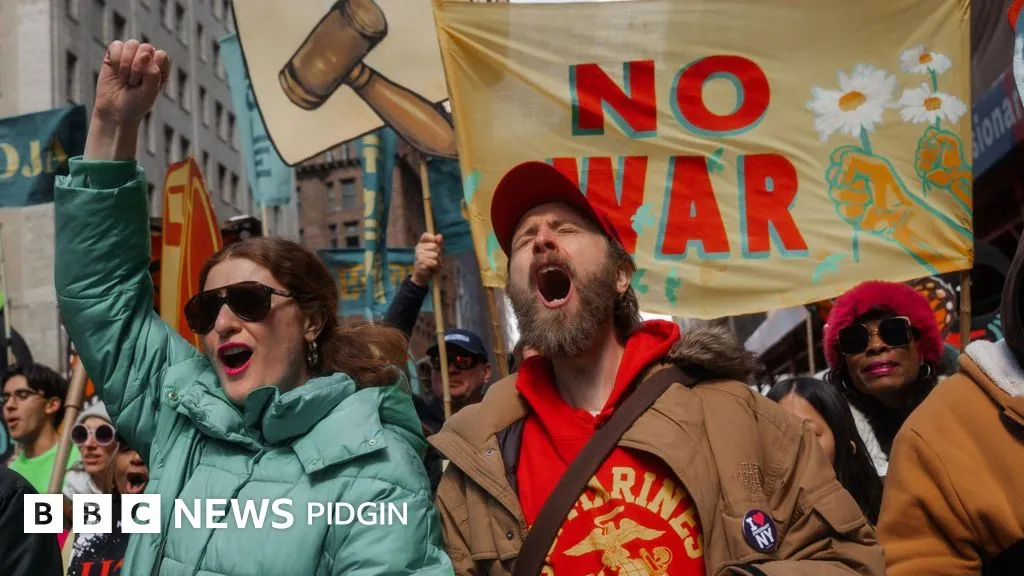
Protests against Trump have erupted in major cities, including New York, Washington D.C., and Los Angeles, with demonstrators opposing his policies on issues such as the war in Iran and federal immigration enforcement. These protests have been described as the largest coordinated demonstrations in recent U.S. history, with over 8 million participants nationwide, reflecting a significant public outcry against perceived authoritarianism.
Organizers of the No Kings protests have articulated their stance clearly, stating, “Trump wan rule as tyrant. But dis na America and power, na di pipo own am not wannabe kings or dia billionaire cronies.” This sentiment resonates with many who are concerned about the concentration of power and the erosion of democratic governance. The protests have included calls for the removal and arrest of Trump and other officials, highlighting the urgency felt by many Americans.
In total, more than 3,300 events were organized across all 50 states, with some gatherings drawing significant crowds. For instance, the last No Kings rally in October attracted nearly 7 million people nationwide, while New York City alone saw around 100,000 participants. The movement has also seen participation from American expatriates in cities like Paris, London, and Lisbon, indicating its international resonance.
Bruce Springsteen, a prominent figure in the arts, contributed to the protests by performing his song “Streets of Minneapolis,” which critiques anti-immigration enforcement. His involvement underscores the cultural dimensions of the protests, which aim to unite various movements against authoritarianism. Leah Greenberg, a key organizer, noted, “No Kings was conceived to unite a cross-movement push against authoritarianism. And there is not one way to fight it.”
The protests were largely intended to be nonviolent, although some events did result in clashes with law enforcement, leading to arrests. In one instance, protests were sparked by the tragic deaths of two American citizens killed by federal immigration agents in Minnesota, further galvanizing public sentiment against aggressive immigration tactics.
As the No Kings movement continues to evolve, it remains to be seen how it will influence the political landscape in the United States. The protests are part of a broader historical context of mass protests, including the Women’s March and Black Lives Matter movements, which have similarly sought to address systemic injustices. The ongoing engagement of diverse groups within the No Kings protests suggests a sustained commitment to challenging the status quo.
While the immediate outcomes of these protests are still unfolding, the significant mobilization of citizens indicates a growing demand for accountability and a return to democratic principles. Details remain unconfirmed regarding the long-term impact of these protests, but the movement has undeniably sparked a national conversation about power, governance, and the rights of the people.