The wider picture
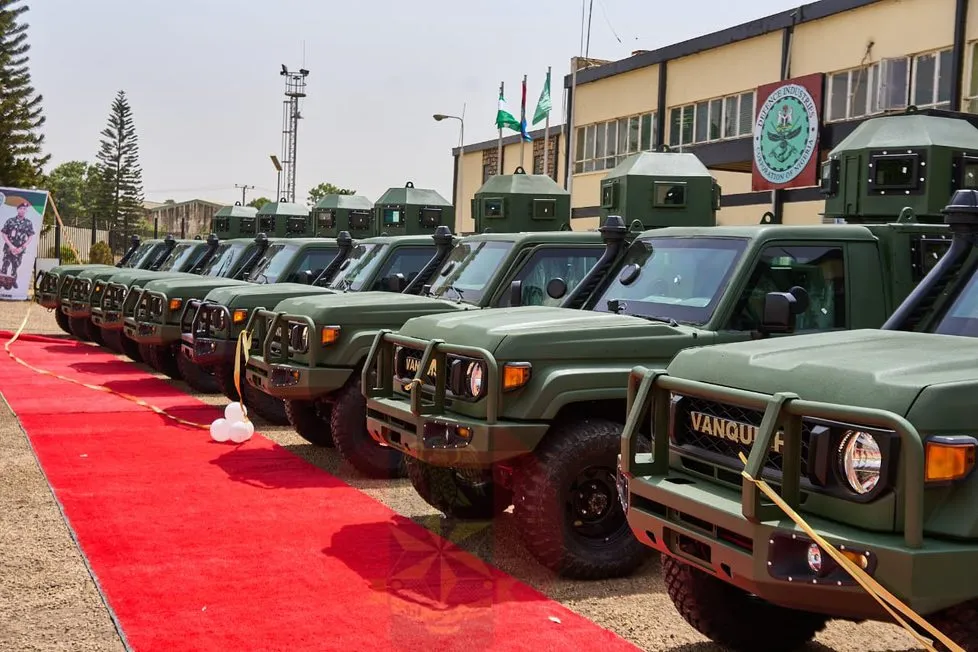
The Nigerian Army aims for self-reliance in military hardware production through local manufacturing. Recently, the Army received 15 Vanquisher light armoured personnel carriers (APCs) on March 4, 2026. These APCs were manufactured by the Defence Industries Corporation of Nigeria in collaboration with Vanquish Industries Limited, marking a significant step towards enhancing Nigeria’s military capabilities.
In addition to the Vanquisher APCs, the Nigerian Army also received Dagger APCs delivered from France’s Arquus. The Dagger APC weighs 5.5 tonnes and can reach a top speed of 110 km/h, making it a formidable asset for the Army. This vehicle can carry two crew members and six dismounts in its transport version, further bolstering the Army’s operational effectiveness.
As part of its commitment to local manufacturing, DICON and D7G announced plans to establish a military jetty near Tin Can Island Port in Lagos. This facility is expected to create over 7,000 jobs, contributing to the local economy and enhancing the Army’s logistical capabilities. Zach Duwa, Managing Director of Vanquish Industries Limited, emphasized the importance of this development, stating, “Today is about more than technology. It is about sovereignty, resilience, job creation and confidence in our ability to innovate and manufacture at the highest level.”
While the military sector is advancing, Nigeria’s health sector faces significant challenges. The U.S. foreign aid freeze in 2025 severely disrupted Nigeria’s HIV treatment programs, leaving many vulnerable individuals without access to necessary medications. In response to this crisis, Nigeria’s government announced a $200 million health funding package aimed at restoring HIV treatment services.
Volunteers in Benue State played a crucial role in addressing the treatment gap, helping to bring over 1,000 people back into HIV treatment between June and December 2025. Dinah Adaga, a volunteer coordinator in the region, described their efforts, saying, “If we couldn’t reach someone by phone, we went to their house – we traced the address and knocked on their door.” This grassroots initiative highlights the community’s resilience in the face of adversity.
One individual affected by the HIV treatment disruption shared her story, stating, “These drugs mean a lot to me. My future depends on them. I have three daughters, and they’re all doing well… They are all (HIV) negative. I’m the only one who is positive. So I believe the drugs were truly made for people like me.” This personal account underscores the critical need for continued support and access to healthcare services.
In a separate incident, Nigerian embassy officials apologized for the alleged coronation of an Igbo king in South Africa, which raised concerns about the representation of Nigeria abroad. Olajide Ogunmadeji, Deputy to the Acting High Commissioner, stated, “The Embassy of the Federal Republic of Nigeria, the High Commission here, does not support any irresponsibility.” This statement reflects the ongoing efforts to maintain Nigeria’s diplomatic integrity.
As Nigeria navigates these complex challenges, observers are closely monitoring how the military advancements and health initiatives will unfold. The establishment of local manufacturing capabilities in the military sector may bolster national security, while the government’s health funding package aims to address the urgent needs of those affected by HIV. The outcomes of these developments will be pivotal for Nigeria’s future.