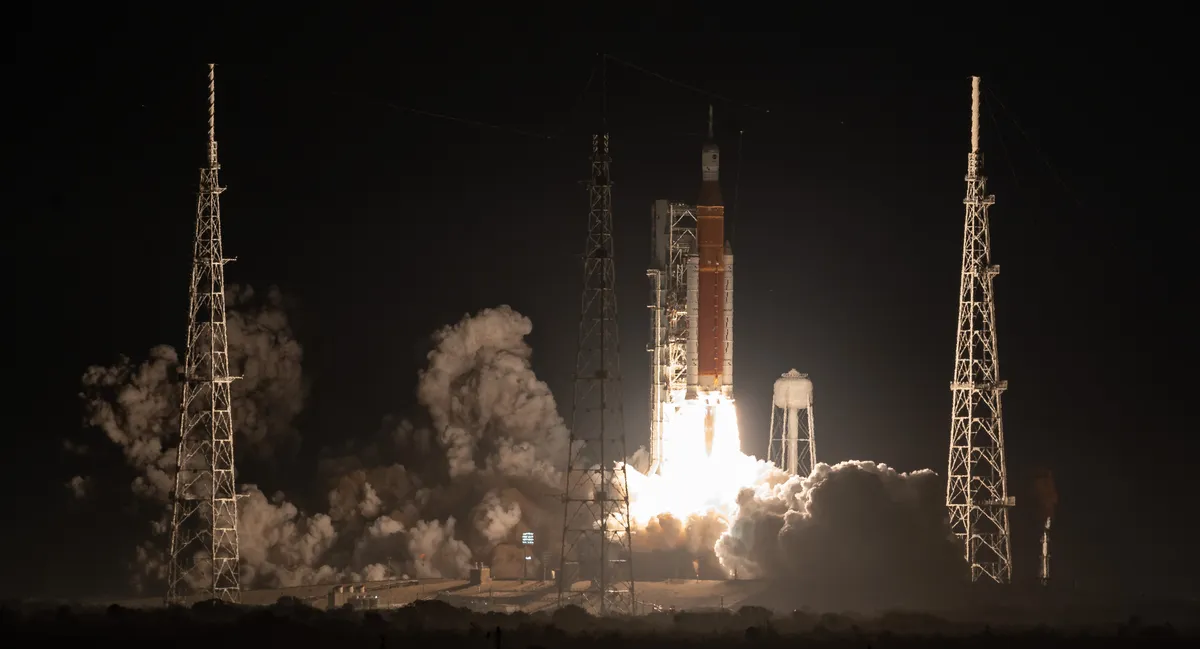
The Artemis II mission, launched by NASA, has achieved a historic milestone by entering the lunar sphere of influence at 12:37 a.m. EDT on April 6, 2026. This event marks the first time humans have traveled farther from Earth than any previous astronauts, surpassing the previous record set by Apollo 13.
At 1:56 p.m. EDT on the same day, the Artemis II crew surpassed Apollo 13’s distance record of 248,655 miles from Earth, reaching a maximum distance of 252,760 miles. This achievement is significant as it lays the groundwork for future missions to Mars, emphasizing NASA’s commitment to reinvigorating space exploration.
The Artemis II crew, consisting of NASA astronauts Reid Wiseman, Victor Glover, Christina Koch, and Canadian Space Agency astronaut Jeremy Hansen, is expected to make its closest approach to the Moon at an altitude of 4,070 miles. Lunar observations are scheduled to begin at 2:45 p.m. EDT, providing valuable data for upcoming missions.
As the mission progresses, the crew will experience a communications blackout for approximately 40 minutes, starting at 6:44 p.m. EDT. During this time, they will witness a solar eclipse from space, beginning at 8:35 p.m. EDT, a unique opportunity for the astronauts.
Christina Koch remarked, “We are now falling to the Moon rather than rising away from Earth. It is an amazing milestone!” Her words reflect the significance of this moment in human spaceflight history.
Jenni Gibbons, a NASA official, stated, “Today, for all humanity, you’re pushing that frontier,” highlighting the mission’s broader implications for space exploration. Jeremy Hansen also expressed awe at the view from the Moon, saying, “It is blowing my mind what you can see with the naked eye from the moon right now.”
The Artemis II mission represents the first lunar flyby since Apollo 17 in 1972, marking a new chapter in lunar exploration. As the crew prepares for their journey, they will gather crucial data to aid in future missions.
Judd Frieling, a mission planner, noted, “We’ll get eyes on the moon, kind of map it out and then continue to go back in force,” indicating the long-term goals of NASA’s Artemis program.
As the mission continues, details remain unconfirmed regarding the full extent of the data collected and its implications for future exploration efforts.