What is the significance of Mosiuoa Patrick Lekota’s passing?
Mosiuoa Patrick Lekota, a veteran of South Africa’s liberation struggle, passed away at the age of 77 on March 4, 2026. His death raises questions about the enduring impact of his contributions to the nation’s democratic landscape.
Lekota’s political career was marked by significant milestones, including his role as the founding Chairperson of the National Council of Provinces (NCOP) from 1997 to 1999 and as Minister of Defence from 1999 to 2008. He also served as Premier of the Free State from 1994 to 1996, showcasing his leadership in various capacities.
Born in Kroonstad, Free State, Lekota was expelled from the University of the North in 1972 for his political activism. His commitment to the anti-apartheid movement led to his imprisonment on Robben Island for eight years, a testament to his dedication to the cause of freedom.
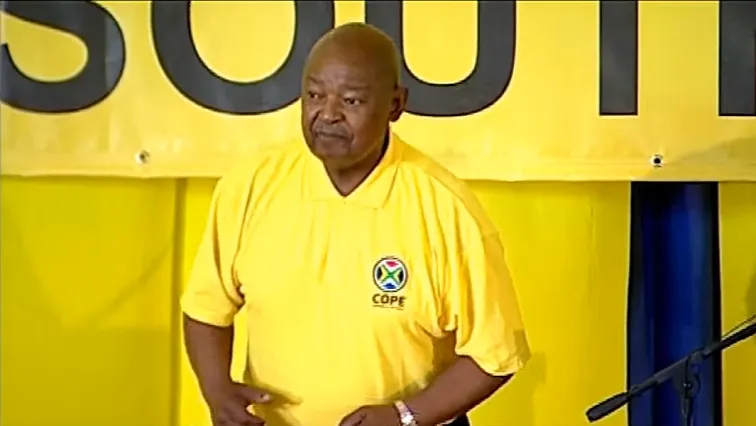
After his release, Lekota became a member of the African National Congress (ANC) and was part of its National Executive Committee (NEC) and National Working Committee (NWC). However, he later became a vocal critic of the ANC after co-founding the Congress of the People (COPE) in 2008, highlighting his complex relationship with the party.
His contributions to the NCOP were particularly significant, as he helped establish it as a forum where national legislation is scrutinized through the lens of provincial priorities. This framework has been essential in ensuring that diverse regional interests are represented in the legislative process.
In the wake of his passing, tributes have poured in, with Zanele Sabela stating, “Robala ka kgotso ‘Terror’” and others acknowledging Lekota’s prolific oratory and the sacrifices he made for South Africa’s democratic breakthrough. One commentator noted, “The nation is indebted to this giant of the liberation struggle,” underscoring the respect he commanded across the political spectrum.
As South Africa reflects on Lekota’s legacy, it is clear that his influence will be felt for years to come. His role in shaping the country’s political landscape and advocating for democracy remains a critical part of South Africa’s history.
Details remain unconfirmed regarding the arrangements for memorial services or tributes to honor his contributions. The future of COPE and its direction in light of Lekota’s passing also remains uncertain.