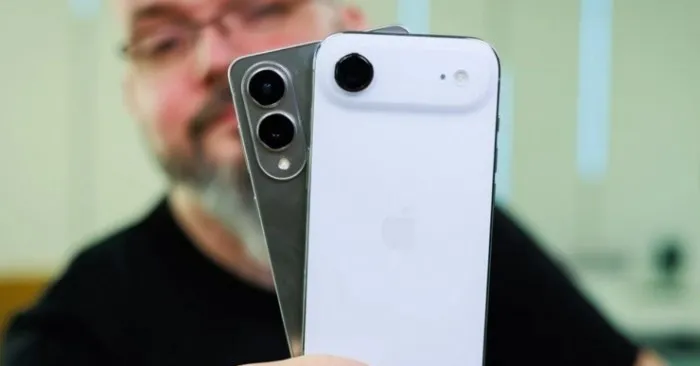
The iPhone Air has recently made headlines by establishing itself as a formidable player in the smartphone market, particularly when compared to its predecessors, such as the iPhone 16 Plus. Previously, the expectation was that the Plus models would continue to dominate sales due to their established user base and features.
However, the launch of the iPhone Air marked a decisive shift. It is currently being used at twice the rate of the iPhone 16 Plus during equivalent launch periods. This surge in usage is underscored by the fact that the iPhone Air captured 6.8% of usage, nearly tripling the share previously held by the Plus model.
The immediate effects of this change are evident. The iPhone Air recorded three times as many Speedtest samples as Samsung’s Galaxy S25 Edge in the US, demonstrating its strong performance in real-world usage scenarios. This performance is attributed to the A19 Pro chipset, which powers the device, providing a 6-core CPU and a 5-core GPU, albeit with one less GPU core than the iPhone 17 Pro.
In terms of design and features, the iPhone Air boasts a 6.5-inch 120Hz OLED display, enhancing the visual experience for users. Additionally, the base storage starts at 256GB, catering to the growing demand for more storage in smartphones.
The camera system is another highlight, featuring a 48MP Fusion camera and an 18MP front camera with Center Stage support. This strong camera system has been noted for its capabilities, with experts stating, “The iPhone Air reveals a strong camera system led by the 48MP Fusion camera.”
Battery life has also been a strong point, lasting a full day for typical usage, with the device reaching 50% charge in just 30 minutes. This performance is crucial for users who rely on their smartphones throughout the day.
Experts have remarked on the iPhone Air’s performance, particularly when pushed with gaming and multitasking workloads, stating that it stands out in these scenarios. The main difference from earlier models is its ultra-thin design combined with flagship-level performance.
Overall, the iPhone Air appears to have carved out a meaningful niche in the market, especially compared to earlier alternatives like the Mini and Plus models. As it continues to gain traction, it will be interesting to see how it affects the competitive landscape in the smartphone industry.