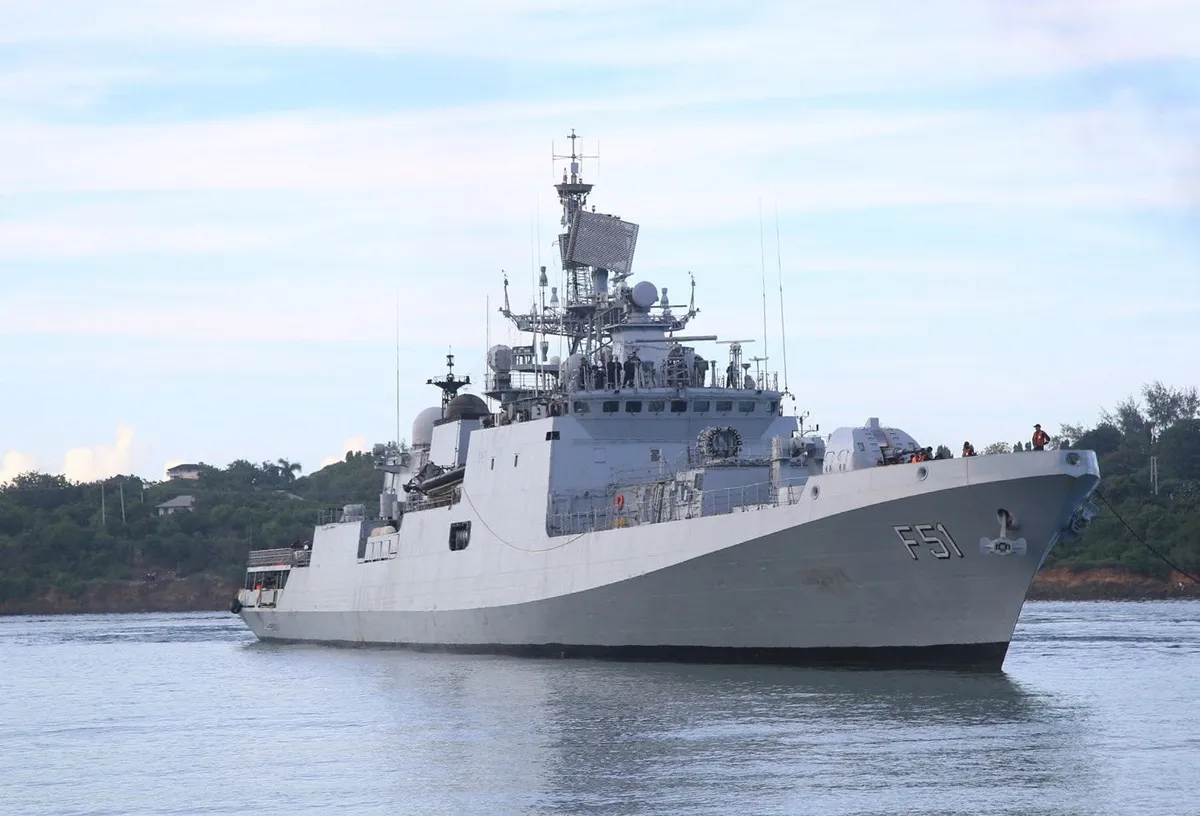
The Indian Navy’s presence in the Western Indian Ocean has historically been characterized by a focus on regional stability and maritime security. Prior to recent developments, expectations were set around strengthening partnerships with regional navies through joint exercises and port calls. The Indian Navy has been actively engaging with various countries in Africa, aiming to enhance its operational reach and foster collaborative defense initiatives.
However, a decisive moment occurred during the port call of the Indian Naval Ship (INS) Trikand in Mombasa, Kenya, from April 7 to April 10, 2026. This visit marked a significant shift in India’s maritime diplomacy, as the Indian Navy handed over 100 assault rifles and 50,000 rounds of ammunition to the Kenya Navy. This gesture not only symbolizes India’s commitment to bolstering Kenya’s defense capabilities but also reflects a deeper strategic partnership between the two nations.
The direct effects of this visit are multifaceted. For the Kenya Navy, receiving such military support enhances its operational readiness and strengthens its capabilities in safeguarding maritime interests. For the Indian Navy, this port call serves as a platform to showcase its advanced naval assets, such as the INS Trikand, which is equipped with modern weaponry including a 100mm A-190E gun and missile systems. The visit underscores India’s commitment to enhancing interoperability with partner nations in the region.
Vice Admiral Krishna Swaminathan, representing the Indian Navy, emphasized the importance of this engagement, stating that “the visit underscores India’s commitment to strengthening maritime cooperation, enhancing interoperability, and fostering strong ties with partners in the Western Indian Ocean Region.” This sentiment is echoed by Major General Paul Otieno of the Kenya Navy, who highlighted the significance of collaborative defense efforts in addressing common security challenges.
In a broader context, the Indian Navy has been expanding its fleet and capabilities, having taken delivery of multiple domestically built vessels, including the Nilgiri-class guided missile frigate. Additionally, the acceptance of INS Sanshodhak marks the completion of the four-ship Sandhayak-class survey vessel program. These developments indicate a strategic pivot towards enhancing indigenous capabilities while fostering international partnerships.
Furthermore, the Indian Navy is exploring innovative solutions, such as the feasibility of utilizing drones for reloading Vertical Launch Systems (VLS) at sea. While the practicality of this concept is debatable, it highlights the Navy’s forward-thinking approach to modern naval warfare and logistics. The proposed drone, with a payload capability of 900 kg and an endurance of 2 hours, could revolutionize operational efficiency at sea.
As the Indian Navy continues to engage with African nations, the implications of these partnerships extend beyond mere military cooperation. They signify a commitment to regional stability and security, addressing maritime threats that affect not only India but also its partners in the Indian Ocean. The ongoing collaboration is expected to evolve, with potential future engagements that could further solidify these ties.
In summary, the visit of INS Trikand to Mombasa represents a pivotal moment in Indian maritime diplomacy, reinforcing the notion that collaborative defense efforts are essential in navigating the complexities of regional security. The strengthening of ties between the Indian Navy and the Kenya Navy is a testament to the evolving dynamics of international relations in the maritime domain.