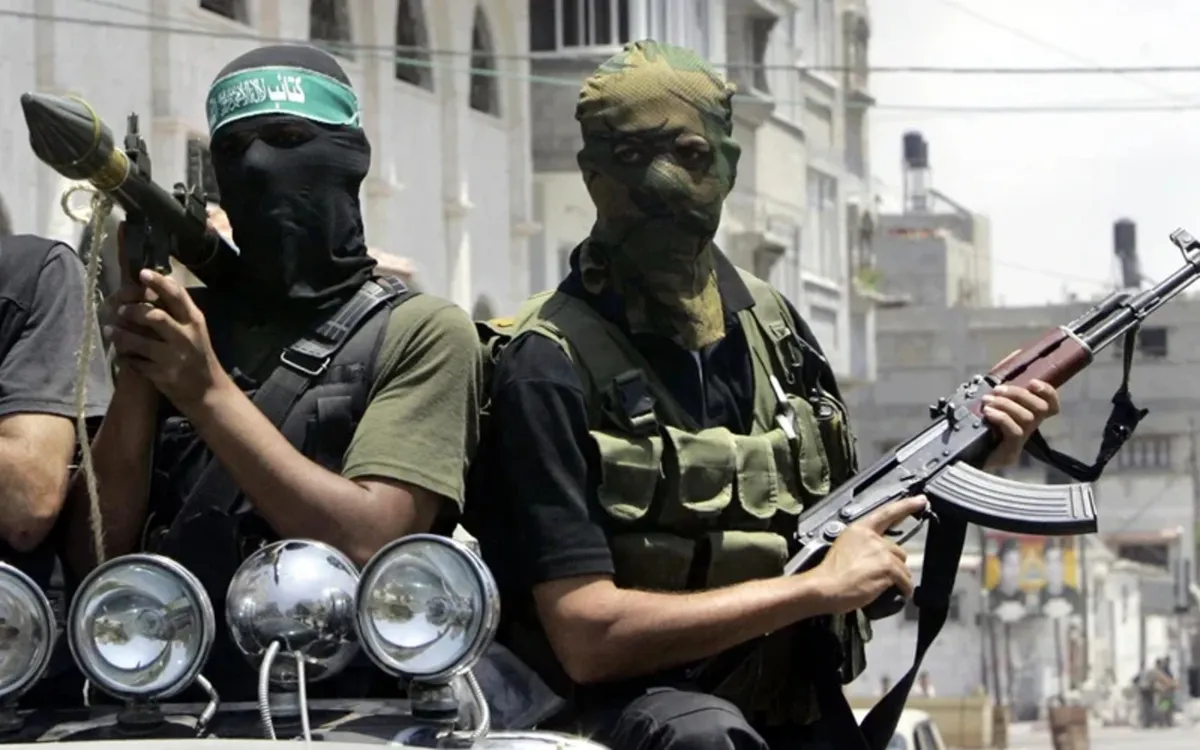
Who is involved
The situation in Gaza has been marked by a fragile ceasefire that has been in place for six months. During this period, expectations were that diplomatic efforts would lead to a more stable peace, particularly with the involvement of international bodies like the Board of Peace. However, recent developments have shifted the dynamics significantly, with Hamas facing increasing pressure to disarm as part of ongoing negotiations.
In a decisive moment, the Board of Peace set a deadline for Hamas to agree to a disarmament framework, which is to be finalized by the end of the week. This ultimatum comes as Hamas leaders engaged in discussions with Turkish President Recep Tayyip Erdogan regarding the disarmament issue. Despite these talks, Hamas has publicly rejected the demand to disarm, which has raised tensions further.
In the immediate aftermath of the deadline announcement, the Israeli Defense Forces (IDF) reported that Palestinian terrorists had violated the Gaza ceasefire 22 times since the onset of the Iran war. The IDF has responded with targeted strikes against Hamas, eliminating several members involved in planning attacks against Israeli forces. This escalation has led to a cycle of violence, with Hamas accusing Israel of failing to uphold its obligations under the ceasefire agreement.
Expert voices highlight the implications of this standoff. Nickolay Mladenov, a senior official from the Board of Peace, emphasized the urgency of the situation, stating, “Whoever does not cross the river will drown in the sea.” This metaphor underscores the critical nature of the negotiations and the potential consequences for Hamas if they do not comply with disarmament demands.
As the IDF continues its operations, they have documented efforts by Palestinian terrorists in Gaza to reconstitute their strength and carry out attacks against Israeli forces. The IDF has identified and eliminated armed terrorist squads from Hamas, further complicating the situation on the ground. In a specific operation, three Hamas members were eliminated, including a key commander, which reflects the ongoing military strategy of the IDF to dismantle Hamas’s operational capabilities.
International officials have pressured Hamas to adopt a more pragmatic approach to disarmament, linking it to the flow of humanitarian aid and rebuilding efforts in Gaza. The IDF has noted that Hamas’s disarmament is seen as a condition for the resumption of aid, which is critical for the beleaguered population in Gaza. However, Hamas has countered these pressures by accusing Israel of not providing sufficient humanitarian aid, further complicating the narrative.
Details remain unconfirmed regarding the exact number of casualties resulting from the recent strikes and clashes. Additionally, the consequences for Hamas if they refuse to agree to disarmament remain uncertain, as the deadline for agreement could change based on evolving circumstances.
The ongoing conflict illustrates the complex interplay of military action, diplomatic pressure, and the humanitarian crisis in Gaza, with Hamas at the center of these developments. As the situation unfolds, the international community watches closely, hoping for a resolution that could lead to lasting peace in the region.