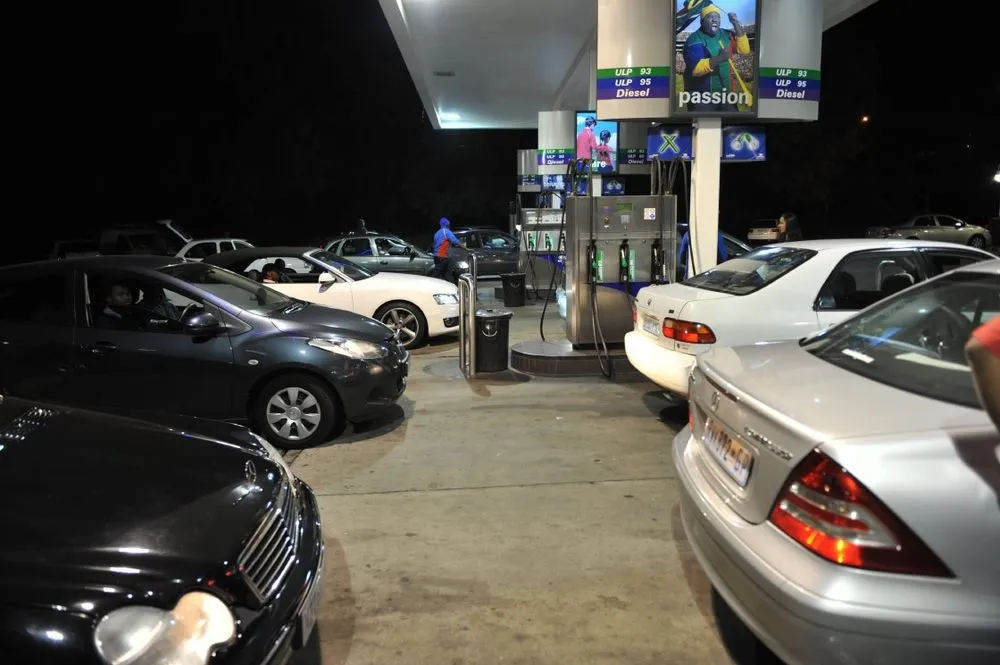
South Africa is grappling with a fuel shortage as the nation’s reliance on just two operational crude oil refineries, NATREF and Astron Energy, alongside the Sasol Secunda coal-to-liquids plant, raises concerns about supply stability. The situation has become increasingly precarious following the closure of several major refineries, leading to fears of potential rationing.
Currently, only 18% of South Africa’s crude oil imports travel through the Strait of Hormuz, with the majority sourced from West African nations such as Nigeria, Angola, and Ghana. This dependency on imports, combined with the volatile global oil market driven by geopolitical tensions, has left South Africa vulnerable to price spikes and supply disruptions.
The price of petrol has seen significant increases, with petrol 95 priced at R3.98 per litre and diesel ranging from R6.63 to R6.75 per litre. Experts suggest that if geopolitical tensions continue, there could be a potential increase of R3 per litre for petrol. This situation is compounded by the fact that 40% of the country’s fuel is coal-derived through Sasol, and only 10% comes from NATREF.
In response to the ongoing crisis, fuel companies have implemented controlled allocation measures to ensure equitable supply to all customers. The Fuels Industry Association of South Africa (FIASA) has confirmed that precautionary measures are already in place to maintain stability in fuel supply.
Professor Vally Padayachee has urged South Africans to remain vigilant, stating, “It would be prudent for South Africans to remain vigilant, as any sudden geopolitical escalation could lead to potentially fuel rationing and lengthy queues at petrol stations.” Meanwhile, James Lorimer expressed concerns about the economic implications, noting, “The problem is that even if we do have enough, the price is going to go up.”
The Department of Mineral and Petroleum Resources has reassured the public that there is currently no immediate risk of fuel shortages. However, higher fuel prices could have widespread economic consequences, straining consumer budgets and logistics costs.
Additionally, concerns are emerging over potential shortages of liquefied petroleum gas (LPG) ahead of the winter demand period. Professor Padayachee emphasized the importance of securing reliable local production to meet seasonal demands, stating, “It is critical for the government and industry to ensure adequate reserves of LPG and to secure reliable local production to meet seasonal demands, thereby preventing any shortages.”
Details remain unconfirmed regarding the exact impact of ongoing geopolitical tensions on fuel prices and availability, as well as the long-term plans for South Africa to achieve energy self-sufficiency.