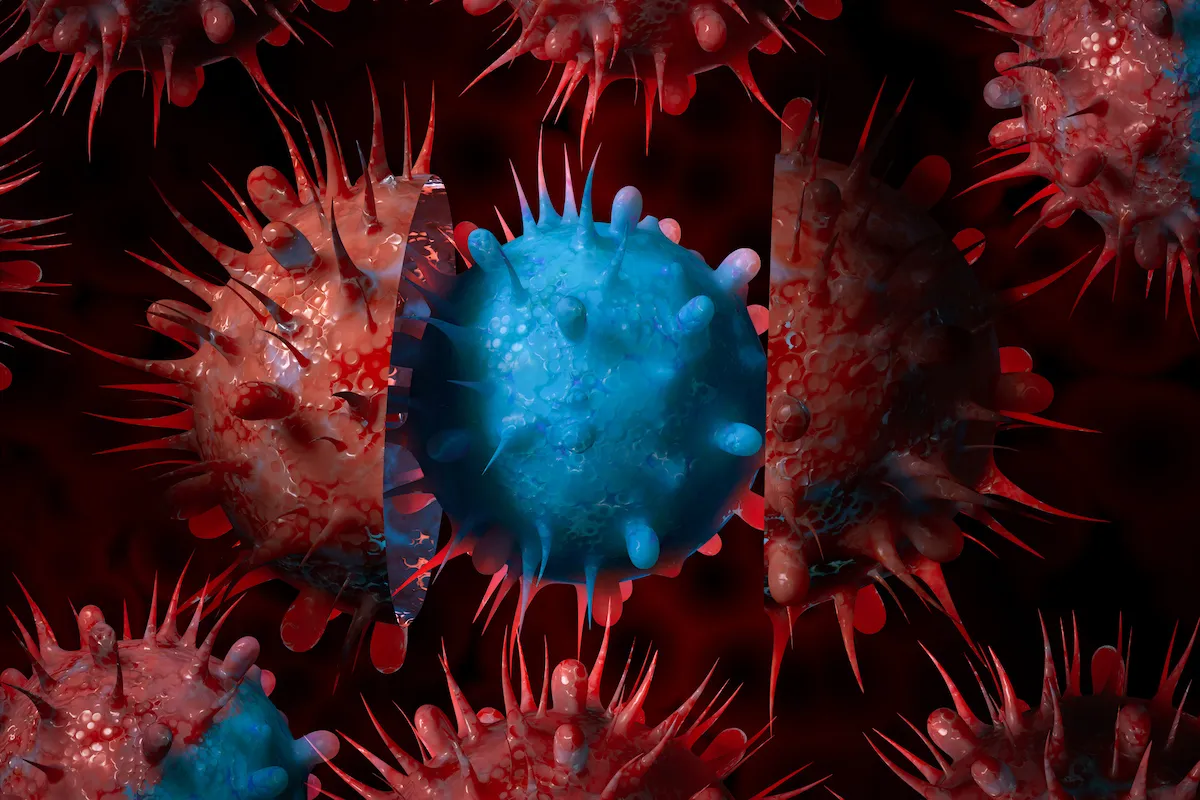
The emergence of the BA.3.2 variant, a descendent of the BA.3 omicron subvariant, has raised concerns among public health officials, although its current impact appears limited. As of March 27, 2026, BA.3.2 has been detected in at least 23 countries, including 25 states in the U.S., but accounts for less than 1% of total COVID-19 cases in the country.
First identified in South Africa in November 2024, BA.3.2 is notable for its high number of mutations, with roughly 70-75 changes in its spike protein. This genetic divergence has led to increased scrutiny from organizations like the CDC and WHO, which classified the variant as one under monitoring in December 2025.
Despite the significant mutations, health experts indicate that BA.3.2 is not causing more severe disease or higher mortality rates. Current vaccines are expected to provide some level of protection against this variant, although there are concerns regarding their effectiveness due to the mutations.
Brandon Dionne, a public health expert, noted, “There definitely are quite a few mutations with this one, so there’s concern that the current vaccine is not going to be a great match.” However, Andrew Pekosz emphasized that while the variant looks alarming on paper, it has not yet made a significant impact on disease severity in most regions.
The variant’s presence has been confirmed in wastewater samples across the U.S., with 11% of samples containing BA.3.2 during the week ending March 21. This monitoring is crucial, as it helps track the variant’s spread and potential impact on public health.
Neil Maniar highlighted the importance of protecting higher-risk individuals and maintaining standard precautions, stating, “The biggest focus is really on protecting higher risk individuals and continuing standard precautions.” Meanwhile, T. Ryan Gregory pointed out that if BA.3.2 had significant advantages, it would likely have dominated globally more rapidly.
As of now, the exact impact of BA.3.2 on public health remains unclear, and it is uncertain how effective current vaccines will be against this variant. Details remain unconfirmed.