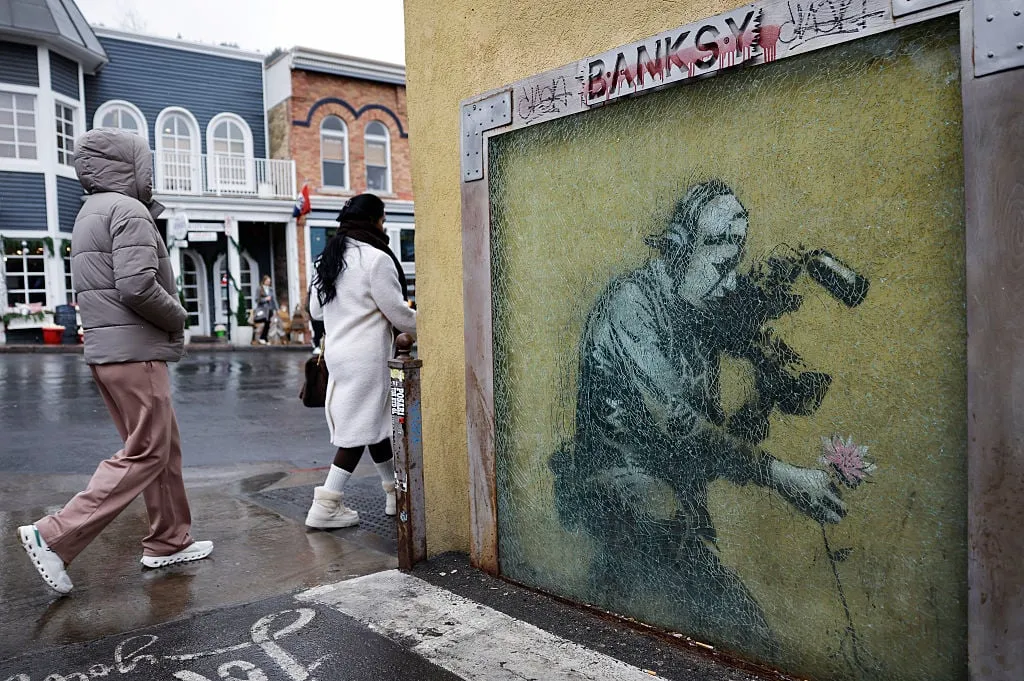
Banksy, the enigmatic street artist known for his provocative and politically charged artworks, has long maintained a shroud of mystery around his identity. Born in 1973 in Bristol, England, Gunningham’s anonymity has been a significant aspect of his persona, allowing him to navigate the art world while avoiding legal troubles and public scrutiny. His early influences included the anarchist punk band Crass and stencil artist Blek le Rat, which shaped his unique style and approach to art.
On March 13, 2026, a Reuters investigation revealed that Banksy is, in fact, Robin Gunningham, a finding that has sent ripples through the art community. Gunningham, who changed his name to David Jones around 2008 in an effort to vanish from public records, had previously been linked to Banksy through various reports, but this investigation provided conclusive evidence. A handwritten confession from a 2000 arrest in New York City, where he was charged with defacing a Marc Jacobs billboard, was signed with his true name, further solidifying the claims.
The investigation also disclosed that Gunningham had traveled to Ukraine in October 2022, raising questions about his current activities and future projects. His anonymity, which he has described as a means of protecting his message and artistic freedom, has been a cornerstone of his work. “Invisibility is a superpower,” Banksy once stated, emphasizing the importance of remaining out of the public eye.
Initial reactions to the revelation have been mixed. Banksy’s lawyer, Mark Stephens, declined to confirm the findings of the Reuters investigation, stating, “My client does not accept that many of the details contained within your enquiry are correct.” This statement has left some observers questioning the validity of the investigation’s conclusions. Additionally, Steve Lazarides, a former agent of Banksy, noted, “The anonymity was a big thing; it started off with self-preservation in Bristol,” highlighting the artist’s motivations for maintaining his secretive identity.
The art market has been significantly impacted by Banksy’s work, with pieces like “Girl with Balloon” selling for approximately $25 million after being shredded at auction. However, the implications of Gunningham’s identity revelation on the value of his art remain uncertain. As the art world grapples with this new information, collectors and enthusiasts are left to ponder how the revelation might affect the desirability and market value of Banksy’s works.
Details remain unconfirmed regarding the exact year of Gunningham’s name change, with some sources suggesting it was 2007 instead of 2008. Observers are also keen to see how this development will influence Banksy’s future projects and whether he will continue to create under the guise of anonymity or reveal more about himself as an artist.
As discussions continue about the implications of Banksy’s identity revelation, the artist’s legacy hangs in the balance. The intersection of art, identity, and anonymity raises critical questions about the nature of artistic expression and the role of the artist in society. With the art community closely watching, the future of Banksy—and Robin Gunningham—remains a topic of intrigue and speculation.