Reaction from the field
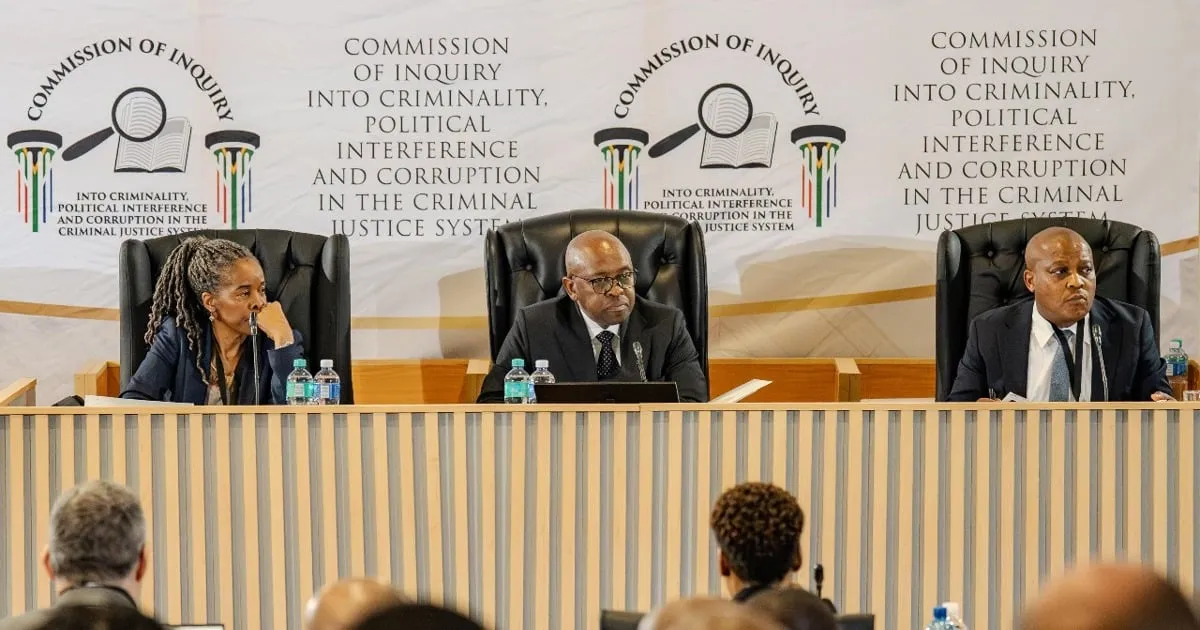
The recent testimony at the Madlanga Commission has unveiled significant concerns regarding the influence of businessman Ze Nxumalo over police actions, particularly in the arrest of blogger Musa Khawula. Sergeant Fannie Nkosi’s revelations suggest that Nxumalo may have exerted undue pressure on police officers to facilitate Khawula’s arrest, raising questions about the integrity of law enforcement in Pretoria.
Nkosi testified that Nxumalo pressured him to take action against Khawula, who had been vocal on social media about Nxumalo’s personal life. In late 2024, Nxumalo opened a defamation case against Khawula, which appears to have been a catalyst for the subsequent police actions. Nkosi stated, “I never felt that he was pushing, I felt that he was just venting out that he opened the case and there was no movement and he was calling people that might help. I took it in that vision.” This statement highlights the complex dynamics at play between Nxumalo and Nkosi.
On the day Khawula’s arrest warrant was issued, Nxumalo provided Nkosi with Khawula’s contact details and the warrant itself, indicating a level of involvement that raises ethical concerns. Nkosi confirmed that Nxumalo purchased six tickets for an aborted police operation aimed at arresting Khawula in December 2024, which further illustrates Nxumalo’s proactive role in the investigation. Nkosi noted, “It was the first time I experienced a complainant having a warrant of arrest,” suggesting that such actions are not typical in police procedures.
Khawula was ultimately arrested in January at a tavern in Dundee, KwaZulu-Natal, following the police operation that Nxumalo had organized. Nkosi’s testimony revealed that he shared contact details for the investigating officer with Nxumalo after Khawula’s arrest, indicating that Nxumalo was closely monitoring the situation. The commission heard that Nxumalo appeared to take charge of the investigation against Khawula, which raises serious questions about the separation of powers and the potential for corruption within the police force.
Nkosi’s comments also shed light on Nxumalo’s motivations, as he stated, “I believe Nxumalo had been ‘desperate’ because Khawula’s social media posts were affecting his life and marriage.” This desperation may have driven Nxumalo to seek police intervention, but it also underscores the potential for personal grievances to influence law enforcement actions.
As the Madlanga Commission continues to investigate these allegations, the implications for police integrity and accountability in South Africa are profound. The relationship between Nxumalo and Nkosi, characterized by close ties, raises concerns about the influence of private citizens over public officials. Details remain unconfirmed regarding the exact nature of their relationship and the legal proceedings against Khawula, leaving the situation shrouded in uncertainty.
In summary, the testimony presented at the Madlanga Commission paints a troubling picture of the intersection between personal vendettas and police actions in South Africa. The case of Ze Nxumalo and Musa Khawula serves as a stark reminder of the need for transparency and accountability within law enforcement to protect the rights of individuals against potential abuses of power.